Blaque In The City

The musings and misadventures of Kat Blaque

Blogs

  • The Real Reason People Want To Burn Down The Bop House

    OnlyFans model Sophie Rain became a topic of conversation when it was revealed that she made $43,000,000 in the first year of opening her account. Her success started a debate online about normalizing sex work to very young women as Rain is currently 20 years old, but for many people, appears to be underage. Many of the women I follow who speak out about sexism were drawn to this story as it seems to highlight men’s desire for very young women. A desire that has historically resulted in the abuse of women and girls that is maintained beneath the patriarchy. Rain took her earnings and decided to open up the “Bop House”, the first OnlyFans content creator house. Taking a page from the Youtube content creator house, The Hype House, these Gen Z sex workers live together, work together and use each other’s platforms to cross promote. They predominately promote their content through apps like Tiktok and Instagram where the Bop House has gained a large following; some of it underage. They participate in many trends, and even create their own. In one trend they created, they put out an open call for auditions and of course some of the girls who answered were underage. Right now, the highest requested new member of the Bop House is a 17 year old blogger named Piper Rockelle. Rockelle is no stranger to content homes. She, along with her mother, started a teenage content home called “The Squad” in 2020 that would dissolve after her mother, Tiffany Smith was accused of pressuring the female members of the house to be more sexual, wear tighter clothes and placate to a male gaze. While she made those comments about the girls in the home, she also made a slew of sexually inappropriate comments towards some of the boys. Today, Tiffany Smith runs Piper Rockelle’s Brand Army account; which, similarly to OnlyFans, offers members access to exclusive pictures and videos for a small subscription fee. Based on the comments some other content creators were able to find on her Brand Army account, it’s clear that Piper Rockelle’s content, while not overtly explicit, is catering to an audience that wants to pleasure themselves to images of underage girls. And unfortunately, this is a growing trend among content creators who start as child bloggers. Piper Rockelle would appear in several social media videos with members of the Bop House, even a video “welcoming” her into the content house; to which they claim to have meant the physical home, not sex work.

    Listening to these young women respond to criticism around their actions, it becomes pretty clear that their brains are still developing. There are judgement calls that they’ve made hastily, and of course that calls into question whether or not these young women are able to truly make these decisions with a full understanding of their consequences. The Bop House has been the source of much debate, especially as other content houses inspired by them start to appear. A content house full of tattooed and edgy models called “The Alt Bop House” has invigorated a conversation about fetishizing alternative women, with many saying that sex work is the antithesis to what they call “alternative principles”. As a goth who is a former sex worker, I have a lot of things to say about many aspects of this and I had a very interesting experience that touched at the heart of this issue while I was working on my script for my Youtube channel.

    When I was 19 years old, I was scouted by a porn company. In 2009, I was in my first few years of college, my family had stopped financially supporting me and I was at the very start of my hormonal transition. Living in Valencia, at the time, it was very hard for me to find normative work. Especially being one of the few black people, and one of the few trans people in the area. It was virtually impossible for me to find employment and legalized protections for trans people wouldn’t exist until 2010. So when this scout from a porn company approached me at a sex party, it was a proposition I considered.

    At the time, this very successful transgender porn company was running a full service porn studio, an online portal for web camming and a night at a strip club. I knew a girl who worked at the club and I’ve always loved to dance, so I considered it… but then I became mortified about anyone seeing me, so I opted for the cam girl thing instead. I’m pointing out my logic here because back in that time, it was pretty feasible that you could be a cam girl and be relatively unknown, where as it was very hard to be a successful dancer and also be unknown. Most of the dancers were also either working for the cam studio or in the porn studio and their dance sets were really just a way to meet and greet their fans and potentially new customers. Back then, I had a lot of fear around my parents finding out and I didn’t want anyone to know I did porn so cam girl felt like a good choice.

    I feel like I need to draw attention to the fact that at 19, I wasn’t doing well. I had been in the full swing of my hypersexuality because of sexual violence phase and I first gained the attention of the scout through my pictures that I’d post of myself on social media. Often times, my pictures were suggestive or flirty. I wanted to be seen as sexy, really, before I had a good sense of my own sexuality. As a teenager, I had an awareness of men’s attraction to me, but I didn’t necessarily understand what it was supposed to be for me. My hypersexuality was set off by being drugged and assaulted by this artist I was working with when I was 15. I was focused on making money so that I could move out of my parents house and finally be myself, so I found this guy online who gave me a job in his studio. Then he raped me and because I needed money, I kept coming back. My groomer also gave me the perfect space to be myself and be creative. It just came at a cost. After that, I’d try my best to repeat these experiences but do so in a way that made me feel empowered and that’s how I got to sex parties where in retrospect, I was abused much more, but felt it was empowering. Some perv took me to my first party the week I turned 18, and for a while, I’d say that I was servicing these parties, almost as if I was an employee. This is the mindset that allowed sex work to feel like not that big of a deal.

    Back then, if you wanted to get into sex work, you really only had the option to do so through a larger company. They controlled distribution and had the large platforms to promote models and you would have to hustle way more and have way more resources to be able to do it independently. What this meant was that our income was often split between both the platform and the company I was working under. I remember thinking that being a cam girl would be easy, but I figured out pretty quickly that sex work is work.

    In many ways, sex work is all about selling a fantasy. In my actual life, I’m a femme bottom who is completely submissive. But when you have a body like mine, it’s harder to sell that fantasy. These men wanted me to perform a type of dominance and aggression that I do not really have. The audience doesn’t really want who you really are, they want a fantasy that suits your appearance. That draws them in, but if you want to get them to stay, you have to change it up. You change your hair, your body, your aesthetic, your vibe to draw in new customers and to keep your existing ones who may have tastes that shift. You have to think about marketing yourself in a way that you probably don’t actually want to. And while I was doing this, the porn company was making most of the money. I’m not proud to say that in my short 3 month stint as a cam girl, I made under a thousand dollars. Which was more than I had before, but at this point in my life, I really recognize how much I was getting screwed because I make that in a much shorter period of time in a way that I don’t feel exploited. I didn’t like being a cam girl. I’d go as far as to say that I hated it and it kinda ruined my sexuality for a bit; and I’m only really just now starting to feel like I have an accurate relationship with my sexuality. However, apparently I still have that sex worker stink on me.

    After doing cam work, I got out of sex work, but would continue doing a lot of sex work-like things. I relied very heavily on men because they had the money. I would sabotage aspects of my education to spend time with a man because he had money and wanted to take care of me. I got hurt a lot before I graduated college and eventually fell in love and desperately wanted to put all of that behind me.

    My ex almost dumped me when he found out that I was a cam girl in my past. He had exes who were sex workers and he didn’t have a fond opinion of them. I remember feeling like I was better than other trans women because I no longer had to do sex work; to the point were I’d deny that I ever did it. He picked me, and I was special because I was better than a sex worker. But there was a shift in our relationship as I started to become mores successful as a content creator. Eventually, I started making more money than him and started paying all of our rent. As I matured, he purchased more Funkos, smoked more weed and would bring home plates of his mother’s Lasagna after I’d slaved over a stove while he was at work. He started to feel undermined by me because I no longer needed him. Because I started making enough money to no longer need his permission or guidance. I remember finally getting to a place of financial comfort and many of the ways that I relied on men, I was very relieved to not “have” to do anymore. Looking back, I overlooked a lot of abusive behavior from men because they had money and were attracted to me enough to want to support me. As I type this, I’m giggling at the previous version of myself that wanted to be a house wife. I’m glad I out grew that. I’m glad I never married that guy.

    Moving to LA, it struck me almost immediately that men had a certain response to me having money. Up to this point, I had lived in conservative communities for most of my life. I was stealth before moving to LA and if I’m being honest, I had a hard time adjusting to the more liberal environment. In the OC, it was a bit more socially acceptable for me to kinda expect for men to pay my way, and I’d honestly became kinda used to that. But in LA, I wanted to be empowered. There were many times when I’d go out on a date with a man and when the check came, I’d grab my card and naturally want to pay my portion; I was proud to do so. And there were men who’d flinch at me for doing so. To many of them, it was an affront to their masculinity that I not only wanted to pay, but was able to pay. Most of the time I’d pay my portion, those relationships ended. In the OC, whenever I’d be out by myself, the men around me would ask me where my children were or if I had a husband. It was as if they expected for women to only exist in relation to men, who of course have the money in the relationship. I was a bit younger back then, but I could tell that there were men that were kinda disturbed by this reality of me being able to do these things for myself. Sure, men in LA are a bit more overtly liberal, but I find that a lot of men struggle to be with women who make more than them, because they rely on their finances to command power in their relationships. That’s also why so many red pilled men shame women for wanting to date men who are financially secure.

    These days, I live relatively comfortably, by myself in a cute little apartment in Hollywood. While I have my partners who do indeed do a lot for me, I do not rely on them financially. I don’t do a bit of handy work around my home, but I don’t really rely on them for anything other than companionship and the time we spend on this rock together. Plainly put, I do not need men and have not needed men in a very long time. My job as a content creator is one that has become lucrative enough for me to be comfortable. I work hard, I don’t exploit myself in the way I once did, and I’m very proud of myself for it. Sex work was a way I pulled myself up, but now it feels like a footnote. Nothing at all comes up when I look up my old stage name and the evidence of my sex work has evaporated as websites got updated and the online atmosphere for sex workers changed. But still, like I said, even after a lot has changed, apparently I’ve got that sex worker stink on me.

    I go to the Goth club every Wednesday night. It’s basically my religion at this point. I go there, I see my friends, I catch up with them, I commune with them. I feel very at home in the Goth community. My ex fetishized alternative women, but would shame me a lot for my alternative aesthetic when we first started dating so I was slowly weened out of it. It’s been nice to marinate in LA for a while now and really find myself again.

    After the club, I usually go to an after hours. I wouldn’t suggest this, but it is certainly a thing I’ve taken to. I don’t do coke and I’m not looking to fuck, I’m just an insomniac who really enjoys meeting people. I was sheltered for so long in the OC that I’m honestly still adjusting to how interesting people are in LA. Not that there weren’t interesting people in the OC; they were just playing a particular role. in the OC, you only really found out who people were when they had a bit of liquor in them and were around friends. People are more out there in LA and I kinda like that.

    The after hours I go to is in this small little house off the boulevard. Tucked away in a quiet little corner. It’s run by a former gang member who I will often see on the boulevard; a nice guy who’s really all about his business. The space isn’t large, but there are several stages for girls who want to dance. I know the guy who runs the girls who dance there; also a nice guy from what I can tell; you never really know. Men come to this little house to meet people, to socialize and yeah, sometimes to pay for dances. Sometimes we have to clear out of a section of the club so that the girls can give special dances to the men who have the funds for them. Perhaps this seems like a strange environment for me to be in, but of the after hours I’ve gone to, this is the one that feels the most chill. Every after hours is going to have a presence of drugs and sex work. They just go hand in hand and late at night, after the bars close, there’s a demand for both.

    Every time I go to this after hours, I end up meeting this guy. He’s a handsome man with a darker complexion, and a very pleasant speaking voice. I think we both registered that we do public speaking and so when we have interacted with each other, we end up having some surprisingly articulate conversations and verbal sparring matches. Perhaps this is the trauma, but I kinda like being able to argue with men, especially when I know they’re attracted to me. There’s something really sweet about being able to twist a conversation a certain way because you know the person wants you. And this guy has always been very clear about wanting me, even as I relented.

    This is an older guy and I think perhaps for that reason, he has always had a very hard time wrapping his mind around what I do for a living, and he also had a hard time understanding my polyamory. So we often get into these debates about these things where he essentially reveals that he doesn’t really believe me. He doesn’t believe that I have multiple partners who care about me and he doesn’t believe that I have been able to pay my rent and more from my earnings as a content creator. The way he responds to me is as if he believed that I was saying these things to simply cope. Keep in mind, he’s doing copious amounts of cocaine most of the time we are speaking and I’m usually drinking a white claw because to me they’re somewhere between a drink and a glass of water. But still, he did entertain me and I was attracted to him. I’ve accepted long ago that more people do coke than I recognized and while I think its a stupid drug, I don’t really judge people for doing it, just abusing it.

    I’ve known this guy for a while now so when he begged to go back to my place for a drink, I unfortunately entertained the idea. Maybe just because I wanted to go home. So we went back to my place and he navigated through the artistic clutter in my apartment to my kitchen where he rummaged through my bar, found the most expensive bottle of liquor and poured himself a large drink that he did not want to finish. This really annoyed me and then he asked me another annoying question as he looked around my apartment, which I will admit is a bit nicer than your average apartment in LA. He asked me how much I paid in rent and I didn’t really want to answer this question, but as I thought of a tactful way to respond, I blurted out

    “Unless you plan on paying my rent, I don’t really think I need to tell you how much I pay”

    He stumbles into my kitchen to find himself a plate that he could use to snort drugs off of and I get into my bed, defensively, under my covers. I really regret inviting this man into my house, but we carry on our conversation. I start trying to talk to him about what I’m working on as he looks around my apartment fascinated by the corners of unfinished art projects and my filming set up. I tell him that I’m working on a piece about this only fans creator home and the conversation quickly derails into a question I’ve now become kinda used to hearing”

    “Are you on Only Fans?”

    Whenever I tell people that I’m an online content creator and they meet me in a goth club where my tits are typically hoisted up to my chin, they often assume I’m using a euphemism about sex work. I suppose it’s true that many of the women I know at the club also have only fans; which is part of why the criticism of the Alt Bop house is so strange to me. Sex workers are a huge part of the goth community and many of the commodified aspects of alternative culture are directly inspired by the presence of BDSM fashion in these spaces. Most of these things are associated with each other because the Goth scene is one full of misfits and weirdos and those on the margins. Naturally, many sex workers feel embraced there. While it is indeed frustrating that many men see alternative women and fetishize them, it’s silly to ignore the sex worker presence in the goth scene; and to be fair, it hasn’t just been men who’ve assumed that I was a sex worker.

    What bothered me though is that this man has had many conversations with me about my job, he’s even met some of my fans who occasionally end up at the after hours. However, he still believed that once he got me alone, I’d somehow reveal that I was indeed a sex worker and that all the things I have did not come from my hard work, but from a man. He started to ask me if I had ever been behind on rent; and I’m very happy to report that I’ve never managed to struggle in that way. We never returned to our friendly banter about my latest project. Instead, he propositioned me.

    I will not get into the details of what he offered, but he wanted to establish a relationship with me where he comes over to my place every day and I service his very taboo fetish. In exchange, he’ll pay all of my rent and then some…and what he was asking for, while strange, wasn’t something I necessarily minded doing…but daily?? For some reason that really stood out to me.

    Because I tend to socialize in after hours like I’m observing people’s personalities, I hadn’t really fully calculated some of the aspects of our interactions. During our conversation, he as begging me to show him my Youtube channel, and the thing is, I already have. I showed it to him and one of the first things he said about my channel, which isn’t about my appearance, was that he didn’t like my nails being as long as they were and that he preferred me with more natural makeup. I dismissed it at the time, but as he sits at the foot of my bed, using my sewing table as a platform for him to snort drugs from, I finally started to get a fuller picture.

    When you’ve been liberated from men’s financial control for so long, you can forget how it works. You can forget that when men feel like they can control you through finances, that they also believe they can control everything about you. Seeing him every day and doing what he wanted me to do everyday, would have worn away at my spirit. Sure, I’d get my rent paid, but now this man has control over me every single day. I couldn’t share what I shared with him, with anyone else if I was in this agreement with him. It started to register to me that this man was actually frustrated with the fact that I wasn’t in a position where I was struggling so much that I’d entertain his offer. There were much sadder, much more dejected times in my life where I’d probably jump at the chance, but now? I’m not remotely close to needing it and I can tell that many men do not like that.

    I can understand why many people take issue with the Bop House specifically, I also feel that much of the criticism is done without an understanding of how the industry has changed. When I did sex work, it was during an era where porn producers and pimps relied on the desperation of the young, often abused women who came to them looking for a way to do sex work lucratively. These companies and these pimps felt like the safest way to do sex work and many women were abused. Many sex workers still are, but OnlyFans has indeed, changed the game for many sex workers.

    These days, if I wanted to be a cam girl, I could easily make my own account on a website like Chaturbate and start earning income without the help of a porn company. I’d still have to split my income a bit, but I could control my content. I could own it and I could produce it all myself. Expensive studios and cameras have been replaced with smart phones on tripods. OnlyFans models can simply upload their content and advertise it to people around the world very easily through twitter and now apps like Instagram and Tiktok. The reason why the Bop House is on these apps to begin with has to do with FOSTA SESTA laws which have made it so that sex workers can’t communicate their services through the platforms they were once able to. These laws were made to prevent human trafficking, but in all reality, they prevent of-age sex workers from using the promotional platforms they’ve been using. For many sex workers, these laws have pushed them offline back onto the streets and back underneath the thumb of exploitative pimps.

    On Red Pill podcasts, you will commonly see men hold court around how degrading it is to be an OnlyFans model, but they will invite them onto their show to be degraded and ironically, this functions as self-promotion for their OnlyFans. In that way, I think the irony is on full display. There are an increasing amount of angry men who take issue with feminism and the progress it’s given to women, but those same men will complain about being a traditional man who provides for his wife. Yet there’s also men who feel frustrated that women feel entitled to their money, who also believe that when they become rich, famous and hot, they should be able to have as many barely legal girlfriends they want. Then there are men who want to see the money they spend as a downpayment on sexual favors, who absolutely resent sex workers. For many anti-feminist men, OnlyFans models represent the fall of man-kind; the end of “western civilization”. They see women who sell sex as a sort of infinite-money-hack, as these days, women can do sex work without a man in the middle. It used to be that because men took most of the money from the girls who worked for them, that many sex workers were stuck in perpetual poverty. Poverty that ensured that these young women always had a reason to come back to sex work and to use these men as middle men. But now that men are no longer benefiting from pimping in the same way and these women are able to make most of the profits, as these women come out and start sharing the numbers, of course these men are going to be upset. They’ve never made 43 million in a year. In their mind, why should she? She’s a whore!

    While I think it’s worth discussing why models like Sophie Rain are successful and its worth criticizing how the Bop House promoted a teen who’s likely already being exploited, I think the anger people have for these women is misplaced in many ways. What people are really responding to is the fact that sex work is no longer underground. Our society has humanized sex workers so much during my lifetime, to the point where I can think of several who have fairly vanilla Hollywood personas now. With that has come improved conditions for sex workers, and are things perfect? Not really. However, what many don’t seem to be understanding is that while pushing these women off social media may seem like a solution to you, disempowering and shaming them makes the abuse porn producers, traffickers and pimps want to accomplish, much easier.

    Shame is a big reason why many women who do sex work never report anything that happens to them. The attitude many have of dismissing and discarding sex workers is the same social attitude that encourages abuse towards them. For those personally affected by the patriarchy, it may feel empowering to shame women who do sex work because they are a tangible and precise target. However, since capitalism has existed and patriarchy was established to feed it, there have always been men who were willing to pay to have access to women, and women whose circumstances have been that their only path to financial mobility is a man. For as long as women have been able to have their own bank accounts, men have conflated our outward expressions of femininity as not that far from sex work. My experiences in multiple ends of this has made it very clear to me that at the heart of this anger around OnlyFans models is a resentment for women being able to become so financially comfortable that she objectively does not need a man. Men look at a gorgeous young woman like Sophie Rain and they resent that the closest they’ll ever get to her is being a paid member of her audience. Her financial freedom reinforces to them that she will never be so disempowered that she’d need to settle for them. That if she ever did date them, it wouldn’t be because they were the richest, hottest, coolest guy; as red-pillers like to suggest. She’ll date them because, well she chooses to; and its become clear to me that many men resent women being able to choose anything for themselves.

    I think the subject of choice is worth considering because ultimately, many of these choices are simply illusions. I guess you could say that I chose to do sex work, but only because my other options were starving, with no school books and no medical care. No one wanted to pay me to flip burgers, but they would pay me to flip them on their backs. I don’t think most people who end up doing sex work would necessarily choose it. I know a lot of sex workers, but very few who I’d say loved their job the way I love mine. But what I’ve learned is that this can be said about most jobs. Sex work is only degrading if you see it as such, and in many ways, I actually think it’s much more degrading to let a corporation use your body and labor to maintain something you will never own that never feeds back into you beyond a small paycheck and then discards you once you fall out of line. I had a negative experience as a sex worker and I’m glad its no longer my gig, but if I got into it now, who knows. I hated taking off my clothes and being paid pennies for it. I hated how isolated I felt within it and I hated having to depend on men.

    Sophie Rain and many other OnlyFans models have come out to say that young girls shouldn’t quit their day jobs for OnlyFans fame. That only happens to a very small amount of people. Most OF creators make just above minimum wage. I don’t think young girls are turning to OnlyFans creators and viewing them as role models, and if they are, I’d like to speak to their parents. Frankly, I think that’s where most of the blame should be placed. Tiffany Smith is feeding her daughter to the sharks because it pays to do so, and that’s very sad to me. More than these sex workers, I believe we should criticize the capitalism that would allow her to feel completely fine selling her daughter. Would she do that if it didn’t pay?

    Sex work is work and we only think of it as easy because we view sexuality through a certain lens because of how sex factors into our lives. However anyone whose done sex work will tell you that if you think it’ll be easy, you will fail. As sex workers have built and gained their own platforms, they can have open conversations about that. To me, it’s hard to get the impression that sex work is glamorous if you’ve heard those conversations. Frankly, sex workers make it look easy, but that’s also part of the job. I personally find what I do now to be much easier. I found out pretty quickly that i don’t quite have the heart for it and I’m not very good at pretending.

    At the end of the day, this is all marketing. The Alt Bop House is not catering to teenagers who are alternative who care about “alternative principles”, they’re catering to men who fetishize alternative women; and if you are one you know they don’t really like them, they just view them as more adventurous than the women they typically go for. They are selling a fantasy the way we are incentivized to do so under capitalism. About 6 months ago, some of you may have noticed that I have started playing up my appearance and have committed to a certain aesthetic on my Youtube channel. I’m also more overtly flirtatious and I’ve finally started wearing bras on camera (lol). Since I’ve made that change, my following has grown dramatically and I’ve made twice as much. On Patreon, I went back and forth with my audience about shifting into “Kat Blaque, the character” and that’s what you now see on my Youtube channel. It’s still me, but it’s a very curated, hotter version of me. My experience with sex work has made it so that I honestly have really struggled around the idea of putting myself together to film Youtube content. I hate the idea of selling my appearance, but I had to shift my thinking around this and I’m glad that I have. Now I see it all as a work uniform of sorts. Soft makeup, a Victoria Secrets push up bra and Jovi by Outre teased up to remind my audience that I’m a Goth without dark makeup that often distracts my viewers. It’s a look that’s worked; it’s a fantasy that sells. I could argue with myself all day about how I’m reinforcing some unhelpful things by leaning into these things so heavily, but at the end of the day, whether I wear a bra or not, whether I wear makeup or not, I alone will not defeat this societal trend of expecting women to be glamorous and presentable within the industry I work in and it doesn’t serve me to act as if it is my responsibility, because it isn’t. In fact, I’d say that trying to make it seem as if it is, does a great job of providing cover for the much harder to destroy societal reality of patriarchy.

    These sex workers are easier to blame than the men who patronize them, but the demand for them will continue to exist whether or not they’re on the main stage or in the shadows. Personally, I like that things have gotten so much better for sex workers that they can finally get paid what they deserve without having to hand their paychecks to a man first and I will always support improved conditions for sex workers over blaming them for being sex workers. To me, that argument is no different from “what was she wearing”. It’s easier to criticize the clothes a particular woman was wearing than it is to deconstruct a rape culture that says if certain women look a certain way, they should expect abuse. But we lean into those half baked ideas because they’re easier to latch onto and we want to maintain the stigma around women dressing immodestly, and therefore maintain a central part of controlling women. There’s a reason why rich men who’ve historically abused women and participated in human trafficking are suddenly trying to “protect women” by creating laws that make it easier for them to keep sex workers and their abuse of them, in the underground.

  • The Kittens in My Garden

    One of my most vivid childhood memories is getting lost. Believe it or not, I got lost a lot as a child. I was one of those leash kids. We were on a walk in our neighborhood and she was outpacing me. She was dressed in her smart, purple work out attire that, in my memory, is always a very of-the-era retro design. She was focused on her fitness goal, while I was taking a more casual pace. I was always the kinda kid that walked the mile. This was one of the very first times I’d ever gone this far into the neighborhood. I was raised to be cautious; and growing up where I did, I never truly knew what it felt like to feel unsafe.

    Our town had virtually zero crime and moving there was very intentional for my parents. My father was raised in the projects of Boston and he didn’t want his children to ever live a life like that. So, when they adopted us, they decided to raise us in a very safe, quite neighborhood in the San Gabriel Valley. My parents were the original owners our home, and that was impressive, but the houses higher on the hill were more impressive to me at the time. The further up you went, the bigger the houses became and the wider the driveways got. I’ve always loved architecture and I remember admiring those big homes, wanting to live in one myself, but not appreciating, at the time just how good I had it. In my wanderlust, I got distracted and lost my way. My mother would hit pause on her Walkmen and then double back to get me. She’d never leave me behind, but I remember that little bit of anxiety I had about holding her back. She was so driven and goal oriented and as a child, I don’t think I was quite as perceptive of just how much sacrifice she made to become a mother. She slowed down her pace and we walked the rest of the way together.

    I would describe my mother as a type-A personality. Perhaps she developed it over time through my grandmother, a glamorous woman who, to my understanding, was fairly strict. She had high expectations for my mother, and from what I can tell, she fulfilled them. She graduated from Harvard with a Masters Degree, she married a good Christian man, she raised her children in a safe neighborhood and was very involved with the church. My mother was…impressive. One of the most impressive women I’ve ever known.

    While my parents raised me in LA County, my mother worked in the middle of the city. She’d drive almost 4 hours to and from work daily, and sometimes I’d go with her. It’s impossible for me not to associate the city with my mother. I spent a lot of time with my mother, perhaps because, despite her being a working mom, she was otherwise quite traditional. She was pique 90s business woman classy. She always kept herself together and til the week of her death, she always kept a consistent hair appointment. You could never catch her slipping, and I remember my grandmother being the same way, just a bit more 60s glam. I’d often go with her into the city for her hair appointments. The culture shock I had when she’d show up to some lady’s house in the hood and she’d be getting her hair done in the kitchen, the smell of Blue Magic mixing with the smell of stove-fried chicken. People were so different in LA. Not to mention, growing up in the SGV, most of my neighbors were Chinese. I didn’t know very many other black people and sometimes these ventures into LA were the only times I interacted with black folks I wasn’t related to.

    My mother was the first person I came out to. I don’t remember exactly how it happened, but I do remember I started by telling her that I was attracted to men and I did this already knowing very well that I was not cis. When I said this to her, she said “that’s not it”; and initially I interpreted that as a rejection of my own statement of my sexuality; but with time I realized that she saw through my (not very convincing) gender performance at the time and recognized that I was likely a trans woman. She never encouraged me or told me who I was, but she never judged me. In school, I got into the habit of wearing baggy clothes over my usually hand-drawn, painted, or sewn clothes that I wore to school that were decidedly more feminine. My father shamed me a lot for being feminine when I was a child, so I learned to hide myself from him, but my mom was a different case. Sometimes she’d be sitting right there when I’d get back home and she’d see part of what I actually wore to school. She’d always chime in with a compliment or a comment about something I was wearing. I have a distinct voice memory of her saying “I like that” whenever I wore something different. I’ll never forget when I purchased my first pair of Doc Martens from my first check from my first animation job and she told me she wanted a pair herself. I guess it shouldn’t surprise me that she liked my style so much as she was one of my first inspirations, but at the time, it always caught me off guard. I hadn’t expected her to be so accepting of me before I came out. She didn’t love all of my outfits though. Maybe the shorts were too short sometimes or the pants too tight. She made sure to let me know, but never made me feel terrible for being myself.

    Shockingly, I was a Thespian in High School; and for my Advanced Drama assignments, we’d have to go see actual stage plays and do reports about them. My mom and I would go into LA by ourselves and go to the most bizarre little plays. Once I came out to my mom, I wanted to see as many LBGT themed plays as possible. When I came out to my mom, I asked her not to tell my father. So it became, I guess, our own little secret. I feel strange about that now, but back then I was so terrified of my father knowing that it felt nice to have someone at home that loved me enough not to do what I was afraid of my father doing to me. While I still remained closeted to my father, outside of the home, in retrospect, I was pretty out there in every other context. I was a kid with splatter painted rainbow jeans and fingerless gloves. we went to so many plays that had queer themes and I remember that being very impactful for me because I didn’t know very many queer people at the time. After the plays, we’d often go get food. There was always this line between my mom and I, and my brother and my father. They’re traditional dudes with chicken tenders diets and we’re more adventurous eaters with an ethnically diverse taste. So we always took our time together as an opportunity to eat in a more worldly way. We had this tradition of getting Pho, which was very exotic to us at the time. My mom and I just had this thing…this thing that only her and I shared. This knowing. This kinship. This love that was specific to us. A sense of humor and warmth and closeness. There was no voice that calmed me more.

    After college, I briefly moved back in with my parents who, by then, had moved from that two story home I grew up in, into a little apartment in San Dimas. It sounds so classist now, but I remember thinking about how sad it must be that they moved from a home to an apartment. We went from having a ton of space to very very little. By then, it was impossible for my father to ignore that I was a woman. At this point, I’d already been stealth and since we lived in a new town now, I was functionally stealth while live in San Dimas at the time. I had just turned 21 and I went on a lot of dates and eventually, I met someone and we moved in with each other and I officially left home. When I moved out, things were a bit strained. My partner was white (well, passing… but that was a white boy!), and my dad didn’t really accept our relationship. Partially because he was white, but I think mostly because he was a man. Moving out marked the point where I started seeing my parents a lot less. Because of my father’s treatment of me, I didn’t like to call home very often and I often resented receiving phone calls from him. It was so hard to talk to someone who flat out doesn’t accept the version of you that is dramatically happier. I regret letting that get in the way of me speaking to my mother while she was still alive. She didn’t deserve to be punished because of how much I struggled to speak to my father. I will always regret not calling enough and bearing and grinning my discomfort just to speak to her more. I thought I’d be raising a family with that particular boyfriend and ultimately, after 6 years, I realized the suburban dream I imagined having with him wasn’t really what I wanted, and I no longer wanted to live in one of those big houses on the hill. So I left him and went to the city.

    A lot of the little shows we went to were in the Hollywood/Los Feliz/ Silverlake area, and I knew that when I moved to LA, that’s the general area I wanted to be in. A few years ago, I signed a lease on a new apartment and I finally live in the Silverlake area of Los Angels. I really love my neighborhood… it’s gang territory apparently, but I’ve been told that if I mind my business, I’ll be fine. My neighbors seem to be really sweet even though I kinda stand out in the neighborhood. Once again, I’m one of the only black people in my area, but I love my location and everyone’s pretty friendly. My neighbors are mostly Salvadorian and they’ve confided in me that they’d rather have me here than a white gentrifier. I suppose my gentrification is less bad because I’m black. My apartment isn’t cheap, but it’s not the most expensive place I’ve lived. It’s the first place i’ve lived in LA that feels like home. I can’t believe I ever wanted to live in a big mansion. What would I even do with all of those rooms? I think it’s the perfect amount of room for me, and the best thing is, I’ve got a patio!

    I’ve never had an outdoor space before and I gotta be honest, it really makes a difference! There’s something really nice about sitting on my patio with a CD on in the other room, a cocktail in my hand, the sound of my neighbor’s Bachata in the distance, and that sweet, sweet city air… maybe even a blunt to really take it over the edge. It’s like my little corner of paradise. It’s been a fun little project for me. I’ve never had outdoor space before so I’ve enjoyed buying all of these various little doo-hickeys for it. A cute little table and chairs, fake leaves to cover my storage, an umbrella for shade during the summer. I didn’t know I had to buy a heavy iron base for my umbrella when I first got it and I was so excited when I eventually got one and I was finally able to up my umbrella! That’s when I started sitting out there and I decided to cover the back gate with thick bamboo to give myself a little privacy because yes I do be on my patio half naked cuz I’m grown!

    A lot of times when I’m writing my scripts for my Youtube videos, I’ll sit on my back patio and write on my Macbook. I was on my patio one afternoon when I got the phone call from my father. He said, through tears,

    “Mumma’s Dead”

    They’ve been married nearly 50 years and I knew that this man, whom I had grown so distant from, was hurting desperately. And so was I. I don’t think I understood permanence until I realized I could never speak to her ever again. I had waited for this moment in time where I’d be able to have Pho with her again, and it never came. It never will come and that hurt. It still hurts. My wound will never heal. I felt helpless so I screamed louder than I’ve ever screamed and a bunch of my neighbors peeped their heads out to see me crying on my patio. That was a day that changed me.

    I remember sitting on her bed with her one afternoon, watching Bay Watch and chatting between commercials; and she told me that when she dies, she wants yellow roses at her funeral. I didn’t register it until I was at the funeral home, flipping through floral arrangements that the reason she said this to me was that I would ultimately be the person to make these plans. She knew that even back then. I figured out through my mother’s death that I was the most successful person in my family. Her funeral fell almost entirely on me. She had a Christian burial complete with a pastor from our church and I made sure she got her yellow roses and a lilac casket. She got her final manicure, hairstyle that I know she would have appreciated and beautiful dress that maintained her modesty, how she often did. Edward held me while I cried nonstop at her funeral. My hair was green at the time. It felt disrespectful and inappropriate for the situation, but I can hear my mom saying “I like that”. When she died, something within me shifted. An innocence I felt I still had, I recognized had been gone for quite some time.


    One of the more recent additions to my patio was a small vase with my mother’s image on it. My aunts friend made it and I managed to take it from the repass. They have this sorta craft-like appeal that I know my mother would have loved. My mother is the reason I’m an artist. In fact, she’s the one who took me to an animation convention many years ago when I was a child; and it was there that I decided to go to Cal Arts because a very impressive person there had graduated from there. She was always making room for creativity. She volunteered for the Brownie Scouts at our church and she was always responsible for coming up with some new craft. Because I was always with her, I ended up doing a lot of these crafts and I think that’s where I got a lot of my handy, DIY nature from. I have fond memories of stealing her sewing kit and hand sewing a lot of my first pieces of feminine clothing. I have all the culture I do because of my mother. She introduced me to a world outside of the bubble created for me and placed the creative seeds in my mind that ultimately led to me being successful enough to be able to bury her.

    The photo on the vase is a photo of my mother in her home office. It’s a photo that portrays a fashionable woman in very humble beginnings. It’s a good portrait of the mother I remember the most. I found a lot of photos of her before she ever became a mom. It’s strange looking at photos of who your mother was before you existed. She had a sheen of youth, optimism and whimsy in her old photos. It’s clear that adopting us changed a lot for her. As I went through her things, this became even more clear to me. In every unfinished notebook and every scrap of paper nestled between a Daniel Steele novel, I saw the dreams she had. Every job she considered getting, language she started learning, every future plan she had and so so so many unfinished notebooks. One of the notebooks I found had little scribbles of texting acronyms. I remember when she wrote it when texting started and she would tickle herself with the silly acronyms we used during the height of t-9 texting. She loved that something like “g2g” meant “got to go” and “ilu” meant “I love you”. She always delighted in those simple things. She hated feeling out of date, and she was starting to look into taking classes about technology. I regret those moments I was frustrated explaining technology to her. I think she would have enjoyed TikTok.

    My mom struggled with MS for many years. I saw her slowly deteriorate from the woman who would leave me in her dust to a woman who relied on everyone for everything. She hated that. She hated that she was no longer able to be the type-A person she used to be. She never wanted to give anyone the impression that she couldn’t do it. As I’m writing this with tears soaking my face, I’m realizing that I get so much of my spirit from her. That was one of the strange things I realized as I processed her death. That so much of who I am, is actually her. In many ways, I’m almost a different version of her that went down an incredibly different path. As I collected her things, I noticed just how many little private bits of happiness she put aside for herself. So that’s where I get it! She had all sorts of trinkets and things that may have seemed insignificant to most, but I know for her contained a memory. We had so much in common and when I found this picture of her, I cried because I never realized that she too also used to wear oversized glasses. I’d never known that, we’d never discussed it. We’re just oriented the same way. Even though I’m not biologically related to her, it’s hard not seeing how much of her is in me.

    Growing up, my father built a walk-in closet for my mother to store her extensive wardrobe in. Because I used to go through it all the time, I was aware of just how much she had downsized. She used to fill rack upon rack with clothes, but at the end of it all, she had very few things. She’d moved twice by now so she had downsized just slightly, but surprisingly, she kept a box full of every accomplishment I ever achieved. Every silly paper I got an A on. Every poem I ever wrote her. Every playbill. Every trophy.

    Recently, I decided to make a real attempt at having a garden. I don’t have a green thumb at all… in fact, none of my plants have managed to stay alive. However, at the funeral, someone gave me a house plant. I dunno the name of it, but it’s a pretty cool lookin’ one. I’ve managed to keep it alive and that made me feel hopeful; so naturally, I decided I could buy a few garden beds from Target and actually try to grow my own food!

    I planted a bunch of random shit. Mostly squash, herbs, tomatoes, peppers, swiss chard and some random flowers. It was slow starting at first, but it’s really started to flourish. I still gotta figure out a way to get rid of those pesky aphids, but all-in-all, it’s starting to look really productive. I started moving some of my planters around to catch the sun more effectively and I feel like I’ve recently found the most perfect feng shui for my patio because it now feels massive and lush now that my summer squash is really taking off. I gotta do some cleaning, but it’s really becoming a peaceful place. my little corner of tranquility.

    The tricky thing about having a garden is you have to tend to it. Right now she’s a little sensitive. The heat is getting to her so I have to make sure I always come back to my apartment and water it so that she’ll continue to grow. A few days ago, Edward finally helped me set up a drip system so I’m expecting it to grow a lot better now. However, before then, it was nice to have a reason to come back to my apartment and take care of something. I spend most of my time at his apartment so until recently, it wasn’t uncommon for me to miss a day and then come back to wilted plants. That started feeling selfish though so I made a habit to come back every day to make sure the plants were ok.

    The past week or so, I’ve had some visitors on the patio. A pair of very adorable kittens who have recently enjoyed using my patio as a shady little get-away during the heat wave.

    Alexander saw them this week when we had our date and he and his wife are pretty notorious for taking in the neighborhood cats. They have a little shelter for the ones that stop by. When the kitties first came to my patio, I realized how nice it felt to have them there. They’re so cute and sweet, and its just nice to see them. It brightens up my day a little bit. One of them is really timid and shy and the other is very chaotic. I sometimes sit on my patio and watch them catch flies.


    I got the impression that they weren’t eating and didn’t have a cool place to lay so I decided to open up my umbrella and I tried to create a few little spaces for them to chill on my patio. For my mother’s funeral, I received a large flower arrangement in a basket. I kept the basket for emotional reasons, and I realized that it would actually make a pretty great little place for the littles to chill. So I took some pillows and put it in there so they’d have a place to relax.

    Today while I was in Target, I decided to get a little bag of cat food for them because I figured they were hungry. When I got home, I took my doggy placemat and put some food and water in it and they took to it immediately. I actually grew up with a little kitty named Sparkle who my parents had to get rid of because I was allergic. That’s always made me sorta sad. I’ve never really been a pet person. I like cats, I guess but I’m not a cat lady, really…not yet at least. And I gotta admit, these cute kids had me really considering it.

    As I sat there watching them eat…I started crying. There she goes again, crying on her damn patio. I realized that in a way, without realizing it, I had been exerting, in my own small way, a maternal energy in the space where I learned that I had lost my mother. I think my mother passing away shifted something within me that made me care a bit more about hungry kitties in need of shady place to lay their head. Sometimes when I have moments like this, I wonder if this is evidence of some sort of suppressed maternal desire I have deep down inside. I came to LA for self discovery when I realized that I didn’t really want that suburban life I once dreamed of. But sometimes I have these moments where I remember that a different version of me imagined that at this point in my life, I’d be putting my kids into the 2nd grade. And honestly, there are times where I think about it. Should I be a mom? I feel like the overwhelming answer is a no. I can’t imagine it… but at the same time, I think I’d be a really cool mom. Maybe feeding these kitties is the closest I’ll ever get. As they skittered back into their little shelter under my garden bed, I felt immensely thankful to those kitties for giving me a moment of purpose and not running away from me when I started crying. I like them on my patio. I love the kittens in my garden.

    As it turns out, those kitties aren’t street kitties at all. They’ve got a parent already, so there goes my fantasy of adopting them! They still come to my garden and they’ve since become favored by my neighbors. I’m really thankful that my mom adopted me. We aren’t biologically related, but that’s my mother through and through. I used to think we were so different and I wish I was able to celebrate how similar we were when she was alive. I realize now that every little polite suggestion she gave me was her recognizing part of herself in me. That while I knew her as my mother, she was so much more than just that. She existed outside of and beyond her role in my life as a mother. She was complex, she was strong and ultimately she taught me how to love…I miss her a lot. I miss our banter, our dark jokes, our particular love for each other. But in so many ways I’ve realized that she’s not really gone. She lives on in me and is in the love I have for others. So she will always be with me, even if she’s no longer with us. And the same is true for every other person she’s ever touched. She will always be my idol.

    Thanks for the kittens, mom.

  • The Split Realities of Transfemme Desire and Desirability

    I think I’m cute. Although I may have had my own struggles with insecurities, and my transition may have occasionally informed those insecurities, from a very young age, I was always the kind of person who walked past a mirror and found something to appreciate. However, while that may be true, it’s also true that I live in a society that simply does not agree on many levels, and for a very long time, I felt that despite how I felt, I was too black, too dark, too fat and too trans to be loved the way I felt I deserved. So, in my youth, I allowed a lot of men (because, yes, they were men, and I was often still a child) to inform my vision of self to the point where my standards were so low that I accepted behavior from men that I wouldn’t come close to entertaining now. I took trains, I lied to my friends and family, and put my safety at risk on more than one occasion just to experience what was often a private and secretive sexual relationship with a man who of course, had a valid reason for keeping our relationship secret. It was the day after I was asked by a guy to lay flat in the bed of his truck as he pulled a deserted trailer park for fear that someone would see us together that I finally realized I deserved much more. And since I made the decision to no longer share my body privately with men who cannot claim it publicly, my romantic life has improved dramatically… but my trauma persists.  

    Transfeminine people live within an inherent contradiction: two stark realities in which we are both desired and reviled. For some, we embody the failure of manhood. An ultimate perversion and subversion of all the patriarchal ideals that we’ve known. For others, we embody a figure of beauty that is deified. So transgender women experience a world where they’ll struggle finding a job at McDonalds but won’t struggle finding a rich man who is willing to fund their transitions as long as they’re willing to exploit themselves to give said men their shemale fantasy. I feel alienated by both of these realities and something I’ve come to discover is that many people struggle to comprehend transgender women as being real people, with real experiences, real histories, who really do live their lives as their genders. We are often the crude party trick teenage boys play with each other. “Do you think she’s hot?”, and if you answer yes, you’re gay cuz she’s got a dick. Our realities are minimized to repulsion and fetishism and if you know anything about the latter, you know the former goes hand in hand.

    When I say people struggle to comprehend our realities, what I mean is they tend to often view us as an idea, a trick or a deliberate nuisance. It’s not that I, like every other human that experiences sexual desire, have romantic and sexual relationships. It’s that I masquerade as a woman in order to trick and fool good heterosexual men, who’d otherwise want nothing to do with me. My actual reality is that I move through the world in a way where my transness never really comes up outside of conversations with people I’m intimate with, or in conversations with friends and colleagues. Men hit on me quite a bit when I go out and if I’m interested, I’ll tell them that I’m transgender and my experience isn’t what many would assume. Society would like to believe that each time a man approaches me, he’s completely averse to my transness. In my experience while most heterosexual men may fully exclude transgender women from their dating pool, many of the men who’ve approached me aren’t really turned of by me being transgender. In fact, there have been more than a few situations where it made me more interesting to them. I guess for me, while I understand that my transness is shocking to many people who’ve never interacted with a transgender woman, at 33 years old, I’ve lived a long life and I’ve spent my entire adult life as an out trans woman who is typically read as cis. At a certain point, it becomes kinda pedestrian to say over and over again “i’m a woman and most of the men who pursue me are straight” because that’s what I’d argue most women, cis or trans experience. We live in a society that says femininity is a performance to be consumed by heterosexual men, so of course that’s going to be who pursues me the most. And despite the fact that I have a strong preference for bi or pansexual men, I’ve had my longest term relationships with heterosexual men. That’s not a badge of honor or a validation of my gender, it’s just…what it is. But some people quite literally can’t imagine this to be the case and most people don’t know enough trans people to otherwise understand just how common that is. Contrary to what many would like to believe, I’ve never been able to attract men seeking other men and most of the men who pursue me do not use the label “bisexual” to describe themselves and none of them have described themselves as gay. And honestly, that’s a shame because gay men are often cuter and bi men often more emotionally intelligent than the average straight man. But still, my romantic life is painfully straight. And honestly, the only intimate partners of mine that have wanted to masculinize me are white men who racially fetishize me.

    I think I’m boring. Sure, maybe I’m a polyamorous goth who is kinky, who is also an artist, who is also a Youtuber, who is also a community organizer, who is also a public speaker, but I think I’m pretty boring. I don’t live the crazy life conservatives seem to think I do where everything I do is predicated by being transgender and I don’t spookily lurk the halls looking to spread my (well-funded) woke agenda to the masses. I exist in this body, as I am, and this body has history. This body has trauma. Trauma that is exacerbated by these two realities, how I process them internally, and how others process me. 

    Contrary to the common narrative that transgender women are not and could never be desirable, I have always had to navigate the aggressive ways in which men express their desire for me. Even after no longer entertaining DL men, I have always had men who were interested in me in some way, and I’ve dated many people over the years; more than I should have. However, one of my primary sources of anxiety is why a man may be interested in me specifically. How do they feel about feel about transgender women? Because I’ve discovered that men fall into a few camps.  

    1. Some men are attracted to transgender women because they fetishize them. Every few months, they need their tranny fix and they don’t really identify with it at all. They have no desire to ever publicly acknowledge that they are in a relationship with a trans woman; and by “relationship”, I mean “fucking them in their apartment consistently”.  
    1. Some men are “curious,” and they’re in the process of questioning their own sexuality. They’re not entirely sure they like transgender women, and they are often otherwise quite awkward with cis women. They will connect very well socially with trans women but will either not pursue them or will and will very quickly change their mind. Sometimes even ghost.  
    1. Some men see trans women and cis women as only marginally different… but often this comes with the caveat that she must “pass”. And for him, the only difference is the plumbing, and he really doesn’t care about that  
    1. Some men are no longer holding themselves to heterosexuality and are therefore liberated from the societal pressure that would make dating a transgender woman a daunting task. They are fully indifferent to the opinions of others, and they date who they date with no input from anyone.  
    2. Some men are able to acknowledge that transgender women are attractive, but do not want to be physical with them.
    3. Some men will never date, sleep with or socialize with a transgender woman as they view them as inherently offensive and repulsive.

    I tend to primarily date men in group 3, but I prefer the men in group 4. However, the men in groups 1 and 2 have done a pretty severe number on me to the point where it’s really sabotaged a lot of my relationships.  I think what I’ve desired the most is clear communication about where someone is at, but because most men are never in a situation where they interact directly with a transgender woman, they will struggle to process their attractions immediately and the relationship escalator is very different. What’s often bothered me is men have often made me feel like this complicated thing that must be processed over long periods of time and many of them have lied to me or perhaps not been honest enough with themselves to be directly honest with me about how they really feel. Speaking frankly, I think far too many men become so fixated on not wanting to be seen like a bad guy that they never quite say it. They never quite say “hey, I’m not interested in you” or “I’m honestly only interested in having sex with you because you are transgender, and I don’t date trans women”. What i’ve often gotten is some variation of “I’m going through a lot right now and I don’t want to be with anyone, but maybe one day”. And they like to keep that back door open instead of being honest about how they feel. Honesty hurts, but in retrospect, if men were more upfront about how they felt and didn’t lie to me about some complicated circumstance that makes it hard for them to date me, despite apparently wanting to, I would have saved a lot of heartbreak. I would have been given the chance to move onto men who were interested in treating me how I deserved instead of holding out hope that things would one day change. It’s interesting to me how these days, men who try to put me in that position don’t even really register anymore because I love myself enough not to entertain these types of men. But they still linger..

    I hope this doesn’t sound like bragging, but I have a long line of admirers. Men who are solidly in group 2. Who admires me, likes every picture I post, comments on and engages with every status update, but never had the guts to actually try to pursue me. They’ll ask me out on dates but will never commit to a day. They’ll tell me they’re not in the place to date but get engaged to a cis woman a week later. These men will be amorous towards me, but their own self-doubt and processing will prevent them from ever really taking that step. Most of them are just guys that appreciate me from afar, but some of them have lied to me to cover up their insecurities.  

    There’s one I still keep in contact with who, today, has a rainbow flag emoji and “queer ally” in their bio. I met him many years ago online. After a month of talking, we were supposed to go on a date. The night of our date, he called me to tell me that he doesn’t want to date me anymore because he wants kids one day and I’ll never be able to give him that. I was devastated at the time. I really liked this guy, and he made me feel like he was very interested in being with me. Years later, we reconnected, and he was dating this cis woman who he’d complain to me about all the time. When they eventually broke up, he tried to pursue me, and he told me that what he said in the past was a lie. That he said it as an excuse because he wasn’t ready to go on a date with a transgender woman. Mind you, when I say this devastated me, I mean, it really really hurt me. It has been hard to process that someone could be attracted to me in a genuine way, but then also completely reject me for something I can’t change. But he’d told me he’s grown since. He’s ready now. So, like a fool, I entertain the idea of making up for lost time and he gets back with his girlfriend before we manage to get to the first date.  

    When you’re a transgender woman, it’s almost like you’re let into a side of the world that isn’t visible to many other people. You are approached by these men who are in robust relationships with cis women but desire sexual access to transgender women. Most of the DL men who contacted me weren’t just in relationships, but they were married. Often with kids. So, you see a side of men where they’re willing to completely betray a woman who, in so many ways, has everything you’ll often idealize. And in that, it becomes clear that what you idealize isn’t ideal at all.  

    Growing up, I wanted to get married, have children, and live the life my parents lived: safe, suburban, clean, and family-oriented. I don’t really want that now, but I idealized it a lot when I was younger. I had to process both my desires to do that as a young woman and my social and medical transition at the same time. I wanted to meet a man, fall in love, get engaged, get married and live that idealized life, but I think time demonstrated to me how much i don’t want that and how false that image of suburban perfection really is.  

    A lot of men have lied to me to my face. They’ve told me things that were not true to make me vulnerable so they could get what they wanted from me. At the same time, many men tell me the truth but don’t know mine. I’m used to people assuming that I’m cis and with that, naturally, comes people who will pursue me without knowing that I’m transgender. Perhaps there was a time where a man not knowing was more of an intentional dating strategy, but these days it’s more like, I’ll let someone flirt with me, but I won’t flirt back until I figure them out. Are they accepting of trans women? Are they attracted to them? I’m generally good at spotting that, but I’ve been wrong. I’ve had a man spend half of our conversation telling me how attracted he was to transgender men and women, assuming I was a queer cis woman who was then very angry when I told him I was trans because I was “wasting his time”. I’ve had men who’s publicly expressed transphobic beliefs, corner me on drunken nights to pressure me sexually. I’m glad I’m at the point where men being attracted to me is no longer exciting to me on its own because I truly want nothing to do with the vast vast majority of men. I wish they’d leave me alone, honestly. In all reality, I require an emotionally intelligent man who will no try to make me feel uncomfortable about demanding a certain degree of respect. DL men make you feel like an asshole for wanting to meet them in a public, well-lit place. They’ll try to use your degree of femininity as a weapon against you because it excites them to have that power over you. The reason you’ll never be that girlfriend is always because you’re not feminine enough. You’re not respectable enough. It’s dangerous to date you and dating you may mean that they’ll lose everything. We are pressured to accept less, because we are seen as lesser. And then these men who harm us, have the full protection of our society that, again, often believes that transgender women are repulsive. So repulsive that no one would ever consensually date them. When they murder us, we are rapidly blamed. The “she was asking for it” sentiment often reserved for cis women who’ve been murdered is replaced with “she tricked him”; even in situations where he knew. It’s as if a portion of society refuses to accept that trans women also experience intimate partner violence that can be and often is just as deadly as intimate partner violence against transgender women. In fact, it’s for this reason that statistically, transgender women tend to experience these types of violence more frequently. Some men only prefer transgender women because they can abuse them with impunity.  

    All the above has made it incredibly hard for me to even be receptive, let alone perceptive, of men who are indeed attracted to me without all of the baggage. A few months ago, I had a moment that really shocked me. I had a massive crush on someone I assumed wasn’t inclusive of trans women in his dating life. And so, we were cordial friends, and he was really really nice to me. Still is really really nice to me, and I hadn’t realized that he wasn’t just being nice, he was interested. And he pointed out to me that I wasn’t very forward with men within the sex positive space we were currently in. While he wasn’t directly speaking of himself, it was obvious that he was kinda suggesting to me that I could stand to be more forward with him specifically and it took me by surprise. I had constructed this entire narrative of who he was in my mind, and he turned out to be significantly more pansexual than I’d realized. And while I suppose I could still pursue him, he moved away and I’ve kinda missed that chance. Soon, I noticed that the same was true for a few other people 

    I’m polyamorous and, like I said, I think I’m in the first very functional phase of my romantic life. Each of my partners I’ve been with for more than three years. My longest partner is around 8 years now. None of them have complex feelings about me being transgender. In fact, the subject doesn’t really come up ever. My partners are all child-free men who plan on remaining that way, have careers that they love, and their source of validation comes from themselves. We love to go out and the idea of staying in because they’re ashamed of me is laughable because my partners very much enjoy being seen with me because they’re proud of me and take pride in being my partner.  

    I have virtually no patience for men who are at a stage in their processing where they make their issues, my burden and that’s honestly because I’ve embraced myself as real, tangible, beautiful and valuable. That’s a narrative that exists beyond these two harsh realities of transfemme desire and desirability. 

  • Returning to My Roots

    I started blogging online in the early days of the internet during a time when netizens were few and internet culture was less synonymous with pop culture. Xanga was my platform of choice, and each day, I’d come home from school and write about my day or whatever happened to be on my mind. Eventually, that graduated to a Blogspot account that I aptly titled “Androgofem”, a term that resonated with me at the time that I borrowed from my favorite podcast at the time, Gay Pimpin’ with Jonny Mcgovern. That was my first attempt at an “official” blog, and I wrote about my own experiences and thoughts from the perspective of someone who, at the time, identified as “Gender Queer”. But today, I’m a very different person, with very different desires and goals. And yet, I feel myself drawn more and more to returning to the person I once was, but I think I’m finally mature enough to actually create the blog I thought I was creating back then. And my life is much more interesting now.

    As discussed in my previous post, I’ve recently experienced a bit of frustration with both my Facebook page and twitter being hacked. Meta’s lack of response was, in a way, very empowering to me. If you followed my Facebook page at the height of its popularity, you know that at some point, virtually everything I posted went viral. I can primarily thank Facebook for catapulting me to the modicum of success I currently have thanks to my work for Everyday Feminism and the collaboration and support of Franchesca Ramsey; who also had her page hacked. My page was poppin’. I reached 4 million people a week and maintained a speaking tour for several months during the height of my page’s popularity. I posted virtually every day and I genuinely loved engaging with my followers. Now my page is being run by someone in Indonesia. Posting spam and false stories about celebrities that I would never care for (it’s not a secret that I am not a celebrity crazed person). Beneath those posts are other fake accounts engaging with the post to share it to other people and the hackers are already using my page to spread revenge porn and AI art. All on a page that is verified, with my name on it… The hackers effectively were able to receive more support from Meta than I did with my several contacts. I’m accepting that my page is a loss.

    Surprisingly, with just a few clicks and email exchanges, I was able to regain complete control of my Twitter account and getting it back made me ask if I should, as a creator, entertain the idea of investing in a blue subscription to protect myself. That’s when I started thinking about how miserable the platform was and my feelings about twitter are fairly similar to my feelings about facebook. I don’t use either platform and neither are as relevant as they once were. If this is my job, and these platforms are important, why shouldn’t I invest in them? And to be frank, as I thought about that, I remembered a time where I would just log onto my blog, write what I wanted to write and I didn’t have to worry about the myriad of issues that come with sharing my content on other platforms.

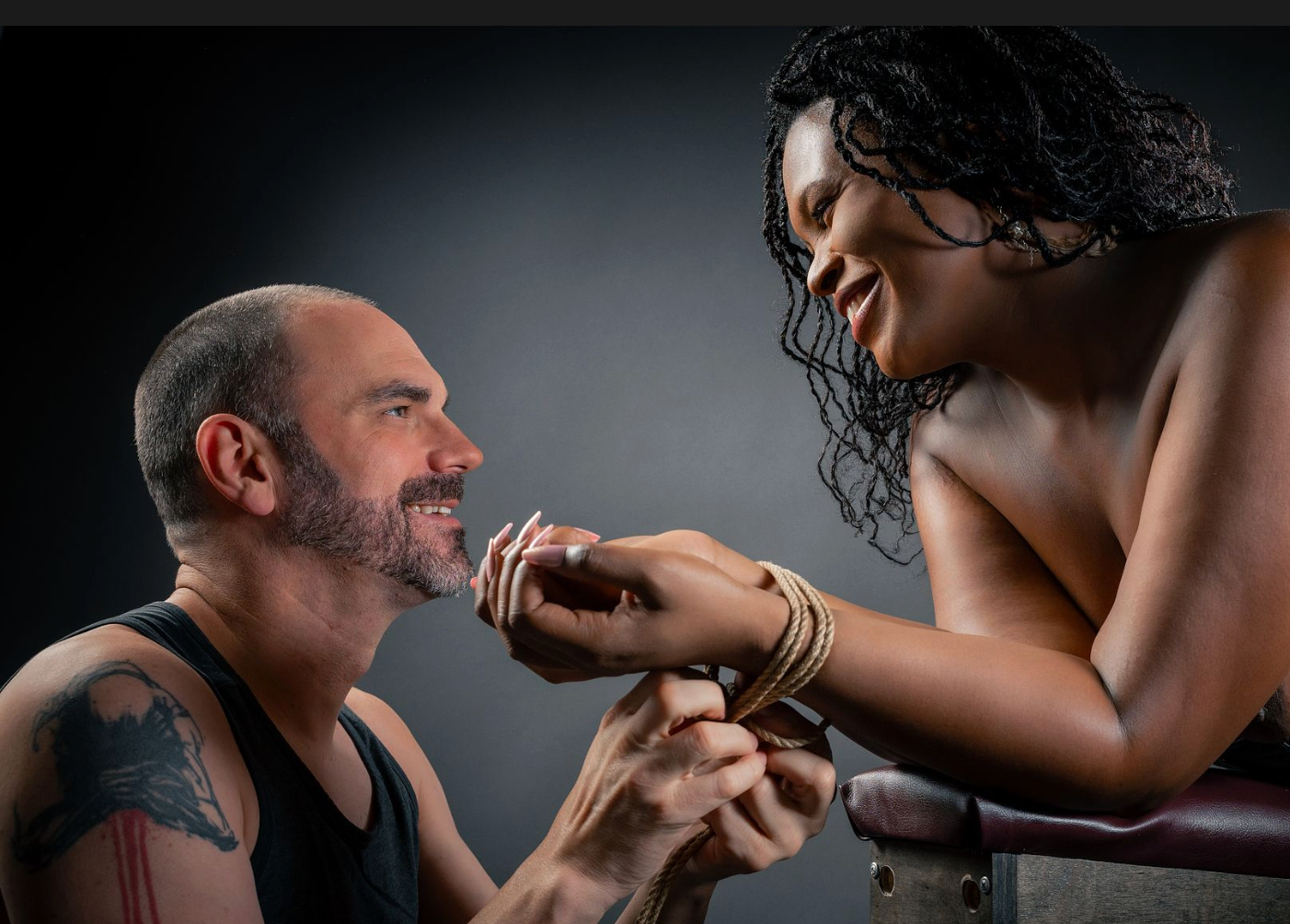
    Recently, I did a photoshoot with a rope artist and when I posted the photos on instagram, I was informed that the photos were explicit and for that reason, my profile was hidden. This frustrated me as part of my energy that has returned to me since leaving twitter has gone towards creating content for instagram and those photos were supposed to make the change of my profile looking a bit more official and professional. But no, instagram can’t handle a photo of me in a bikini. And that’s when I realized that I can just post these images… to my blog. There was a time where that was just what I did every time I took interesting/cool photos, but I had lost sight of that and just how much blogging in this particular format excites me.

    While I’ve become more of a speaker and performer over the years, I am a writer at my core. When I started this blog, I did it with the intention of only posting incredibly profound things, but I realized after thinking about it for a bit that this was becoming a silly excuse for me to not post here. Something I’m trying to do more of is HAVE FUN doing this work. Frankly, I’ve spent too much time online taking myself too seriously and I don’t think any of you are really here just for that. So as an extension of my blog becoming more all encompassing of who I am as a person, I’m going to start posting here way more frequently and my instagram is going to be a space where I share my blog posts and romanticize myself. I think I will always continue to write profound things and I’m excited to just re-establish this habit I once had of sharing as freely as I once did in a form that is honestly far more accessible to me than video production often is.

    I’m starting to think more and more about how people are fighting desperately to erase people like me. I used to feel like the trans women who created content of themselves looking good, but saying nothing were part of the problem. That they needed to use their platforms to draw attention to the real plight of transgender women. However, as time goes on, I recognize how immensely powerful it is to be not just be visible, but confidently so in a society that does not make much space for you to do so. Offline, I spend a lot of time going to fun places, exploring new spaces and building community with other weirdos. I’ll always be a Youtuber who makes video essays and such, but I want to start blogging about that. I think I needed something like my Facebook page getting hacked for me to really value having my own website and centralized blog. Through my content strategy, I forgot the power of having one page you redirect people to where the content is supposed to, theoretically, remain there. Expect to see more posts from me on here. Maybe I’ll even start a Substack.

    In the meanwhile, please subscribe to my blog by clicking the little button in the corner of the blog so you can get emails about when I update!!

  • My Facebook Fan Page Was Hacked: This is how Meta Responded

    As I write this post, several friends at Meta have attempted to handle the issue internally, but they’ve each reached a dead end, and my page is no longer visible. At the height of my Facebook page’s popularity, I would reach 4 million real users per week, but so much has changed about Facebook; or is it Meta now? I can’t keep up with all of these new names billionaires come up with for their data collecting websites that we all feel we absolutely must have to remain in contact with each other and the world. Either way, losing my Facebook Page has truly put some things into focus for me and I wanted to tell you how it happened, how it’s shifted my feelings about social media and also tell you exactly how it happened so that you and your friends can protect yourself from this increasingly popular scam.

    A few weeks ago, I got an email from a producer for Travis Kelce’s podcast, The New Heights. Frankly, I didn’t know he had a podcast and I couldn’t think of a reason why he’d want me; a decidedly un-atheltic, black, goth trans woman to be on his show about Football: a sport I still struggle to understand. Typically, I avoid being on podcasts or shows because I’m pretty sensitive to controlling my own narrative and what I’ve found is that because I embody so many things that aren’t commonly understood, the reasons people want to speak to me are usually not conversations I’m interested in entertaining. However, recently I’ve been pretty excited by the idea of guesting on other people’s things because I’m going through a distinct shift in my life as a creator and there’s something nice about giving up a bit of control and making someone else’s project collaboratively. So despite the fact that I couldn’t figure out why he wanted to talk to me, nor could they tell me why they wanted to speak to me, I decided to say yes. A decision I would frankly come to regret.

    Going into this podcast, I had a lot of reservations. They told me it would be live-streamed, which seemed odd since, from what I can tell, Travis’ podcast isn’t. But I would say the vast majority of times I’ve made any sort of appearance, it’s been far in advance, usually with edits to come in the coming months. I have a lot of discomfort with livestreaming because I’ve found that there’s virtually no way for me to do it without being harassed. As discussed several times on this blog, I have a pretty long history of being harassed and my livestreams are always brigaded no matter how small, no matter how bizarre. I’ve been a blogger for most of my life and I can count the times i’ve gone live and not been called a slur on one hand. It’s never been a format that I’ve liked for formal conversation. So going into this, harassment was a big concern of mine. I was told that they were going to pre record our conversation and livestream it when it came out. In other words, there would be no direct interaction between myself and the audience. The payday was uncharacteristically large; about 5 times what I’d typically make, and naturally my agency was excited.

    So we set up a tech call, and there were numerous red flags. Firstly, I was told that there would be no pre-recording, instead we’d be broadcasting live on Facebook of all places. Mind you, while my FB page had around 178K followers, I hadn’t really used it in a very long time. I would occasionally use it to engage with my audience on there, but those posts never got very much attention. So naturally, I really didn’t understand why we were using Facebook. I brought up my concerns about harassment and the tech guy really didn’t address them. Instead he said to me “We are looking forward to having you on this episode and future episodes.” then he confirmed the dollar amount of my payment with my agency. It was very odd. And very tacky. We don’t talk numbers. I was very put off by this but largely because I placed my trust entirely with my agency, I followed the steps I was given. The tech guy, who wasn’t on camera by the way, instructed me to open up my business account and create a permission for my page. I was honestly feeling incredibly dejected in this moment. I brought up harassment, it was pretty quickly dismissed and I was told how much money I’d be making. It felt gross. I don’t want to sound like I’m not someone who likes money, but it’s not worth my dignity. I have said no to so many interviews and walked away from so many things. I don’t want to be debased unless I consent to it; and if I’m coming onto a show to share my perspective, that’s not the right place or time. But… I am a self sabotager. In the past I’ve said no to opportunities I ultimately regretted not going for. Maybe this would be one of those circumstances…

    And the virgo in me refuses to acknowledge… that I was right.

    Within days, several accounts were added to my business account and they eventually managed to completely remove me from my own page. They’ve now done so 5 times, after I’ve been added back by people at Meta. There is a permission on my page that I absolutely cannot remove and since I’m feeling petty, I’ll share it with you right here. Hackers get fucked.

    Currently, my page is being controlled by hackers in Vietnam and Indonesia. I cannot remove these permissions. I was incredibly upset with my agency so I tried to get them to get the help of someone at Meta, but that was to no avail. I was then told that I should PAY for a Meta Verified account so that I can get one on one support from a real, living human being. After a week or so of being knocked in and out of my page, I bit the bullet and paid Meta so that I could speak to an actual person, not AI. That actual person told me…. to go to fb.com/hacked and change my password and email. A solution I cold find on the FAQ that does not solve the issue with them having complete control of my BUSINESS account. After explaining it for the 5th time to someone at Meta, they finally told me that I had actually been speaking to the wrong department. That I should instead be speaking to the Bussiness support department, so I have to start an entire new support process. And I did that, they got me back into my account and this morning I was kicked out yet again. When I reached out again for support I was told to go to fb.com/hacked and change my username and password….

    As you can probably tell, this was all incredibly frustrating to me, but it really put things into perspective.

    Here I am, a decently known creator, with a verified page that I earned through publishing content on reputable new websites and becoming a recognizable public figure, and I can’t get direct support from Meta?? I had several friends of mine who’ve also been hit by the same scam and they tried to connect me with people at Meta. I’ve sent my info to at least 4 Meta employees and each of them got back to me and said that they were “getting the runaround”. When the hackers stole my page, they immediately started posting AI art. They ran pornographic ads and posted inflammatory things about Russian and Indian celebrities that would get a lot of engagement. I mean they made dozens of the same posts over and over again and they were able to get more robust support from Meta than I was given at all. On almost any other platform where I have an audience of that size of smaller, I’ve been able to receive support from the company. All of this happened a week after I spent a few days giving direct advice to social media companies about creator experiences on their platform. And in those conversations, I frequently mentioned that Facebook was a dead platform, overtaken by AI art and spam that cheaps the platform. Its truly the website for older folks who knew almost nothing else. Everyone I know who has facebook still really struggles to delete it. I myself have a deep disdain for the platform, but I maintain a personal page because I want to be able to stay in touch with people and find out about events in the city. It’s so hard for me to delete even though I desperately want to.

    My Facebook page was successful because of the human element. Whenever I’m traveling to a new location, I’ll make a post on Facebook, asking the hive mind for suggestions. On my first trip to New Orleans, I asked for suggestions for food and drink and so many people came to eagerly share with me what their favorite places were. And I used those suggestions to enhance my trip. I went to so many really cool places because my followers told me to. But now?? Facebook is mostly full of fake accounts obsessively posting either things that are upsetting that will get a lot of engagement or things that are completely fabricated to get a lot of engagement. I see so many blatantly fake news stories that trend on Facebook and it’s kind of out of control. So many older people have been completely radicalized by things they saw on Facebook and these days it truly feels like that’s the core of the platform. Honestly, the only thing Facebook has going for it now is the curated groups of real people. I think I’m far more impressed by people who are able to organize those than people with large pages these days. It just doesn’t carry the same value it once did.

    Social Media is changing and if I’m being honest, that is both terrifying an exciting for me. As a long time blogger, I feel this desire to return to what once was. We did not used to spend every waking hour on the internet! We were able to form strong subcultures and intimate connections and networks without the internet. Frankly, one of the most fulfilling things I’ve done is get off twitter and start community organizing in person. I host a BDSM munch every month and it’s created a great network of friends, comrades and open minded and accepting people and it’s like I can feel my brain piecing itself back together as I logged off and touched grass. Obviously, because this is my job, change is indeed scary, but at this point, I feel like it makes sense for me to do so. The world is changing too.

    If you follow my YouTube channel, you will probably notice that I post less often but at a much higher quality. I have my assistant/researcher, Alyssa, and my editor, Becky, to thank for that. Delegation has been incredibly hard for me, but it’s truly paid off. I’ve decided to really reappropach how I blog online and I suppose this will be a great post to define that for those of you interested in supporting what I do!

    Firstly, my Patreon is how I’m able to do this full-time. People who support me on Patreon really truly are keeping me afloat. That is probably the best way to support what i’m doing and I upload my content on Patreon before I upload it anywhere else.

    Youtube is obviously my main platform, and on my main channel, I will post video essays about trending stories with the goal of making a larger point and encouraging introspection.

    Movies In My Closet is my newest project that I’m developing into a larger, more highly produced series. For now, however, I will upload videos about films that touch on LGBT/Alternative Lifestyles/Subcultures.

    My Blaque In The City youtube channel is just reuploads of my longer/more successful tiktok videos.

    My main tiktok account is going to be me speaking/chatting about things, responding to conversations and telling stories etc

    My side tiktok is going to be beauty/makeup/lifestyle/fun/light hearted content and I’m using it with the thought process of it being my experimental, but very positive account.

    My instagram is going to be essentially synthesis of all these things, but more photography and such.

    And I think I’m the most excited to announce that I will be using this website way more. I think I took myself a bit too seriously when I started this blog, and I miss opening up my blogging page and just typing in my feelings, thoughts and experiences. That is who I am. Those are my roots. Losing my Facebook page just made me realize how much I needed to get back to my roots. I tried to start a new Facebook page, but what would the point even be? Meta has made it incredibly clear that they do not value me as a creator and it’s time to read the room and move forward.

  • Trace Lysette Was “Disappointed” In My Review of Monica (2022)

    Understanding that the personal is political has taken me a very long time. Being one of the only black and trans creators on YouTube, I was under immense pressure to be overtly political. To lend my voice. To stand up for what’s right. To inform and to educate. And I’ve done that for many years, but it became exhausting. It slowly depleted me of my passion, and I needed to recalculate myself as the tides turned and more people picked up the slack. As I started to see more faces that looked like mine and more people who had a similar experience with gender as myself, I realized that I could start… having fun. I could create content about the things I enjoy or find interesting. And that’s when I landed on film review and critique. I went to film school but had been focusing much of my creative energy on creating overtly political educational content online, and that became overwhelming for me during the pandemic when all we could do was fixate on politics. So, I shifted a bit, and now I have several film reviews on my YouTube channel, some of which are my most popular videos. I realized through these videos that I could create content about films that are still political and that there was a lot of power in being a person who has lived through some of the things people can only experience through these films. So I decided to start reviewing films that have themes I enjoy exploring, and that’s when I began to get the idea for my upcoming series, Movies In My Closet; a retrospective series of queer films I once watched while closeted. My goal with that series is to explore the themes and representations of some of the movies that personally shifted me while also exploring what these films were to other queer folks then and what they currently are now. In preparation for this series, I did a series of much shorter reviews to test out different formats. One of those reviews was of the film Monica, starting Trace Lysette. Of all the films I had more recently reviewed, this was the one I was the most excited about and the most eager to upload. However, once it went live, I would soon hear from Trace Lysette that she was incredibly disappointed in my review. The comment she left on my video would remind me of an aspect of “politics” that I don’t often consider.

    Monica is a film about a post-op transgender woman who returns to her hometown to visit the ailing mother who once disowned her for being transgender. As a transgender woman who dealt with her own flavor of being disowned and who recently lost her mother, I knew I wanted to cover it. I immediately made that note when Trace Lysette started posting teasers for the film. I was incredibly excited to see, support, and review the movie, but it had a limited release, and I could not make it to most showings. I kept putting it off as I overwhelmed myself with other projects, and then something happened that made me feel even more connected to the film’s subject matter.

    My mother had MS for most of my life. I watched her go from being an active, type A, Harvard graduate who always had control of everything to completely immobile and unable to care for herself. When my family moved to Tucson, Arizona, it became even harder for me to come and visit them. I was already fairly estranged from my family because my very religious father made it clear to me that he didn’t want to see me as myself. So, my relationship with my mother suffered even more. I was close to her as a child but could not be as an adult. So when I heard that she had passed away, I was overwhelmed with grief and resentment. I wanted nothing more than to be able to have a close relationship with her where I could lean on her for advice about the things I couldn’t speak about in front of my religious father, who resented my happiness in my youth. But she was gone before I had the chance to say goodbye, and that’s something I still struggle with. After my mother’s death, I felt more compelled to watch this film and explore its themes, and when I uploaded my review, I prefaced it with an acknowledgment of this being the headspace for which I watched the film. Acknowledging that my feelings may have built an expectation for what I would see.

    As I said, my review of Monica is one of several shorter reviews created to test a format that would later be translated into the more extensive, highly produced videos I’m planning for MIMC. For this review, I gave my initial thoughts going into the film and then my thoughts immediately after the movie, and I treated Monica like any other film I’d review. Was it compelling? Was it well done? Was the story well written? Was the acting good? What was the motivation behind the choices made? I answered each of these questions honestly because I believe queer films should be considered the way all films are considered. For Monica, there were a lot of things that stood out to me that I couldn’t ignore. Monica is an excellent character portrait but not a particularly compelling story. I can summarize the entire film in a few sentences, and you will have a solid understanding of the story from beginning to end. Monica comes back home to take care of a mother who once disowned her and doesn’t initially recognize her, and through her mother’s seeming acceptance of her feminine nephew, Monica gets a bit of closure. That is, in essence, the entire film. However, that whole story is packed into the film’s last third. The other two-thirds of the film is this long character portrait of Monica that is full of mostly very similar shots of Trace Lysette that are absolutely gorgeous and well done but do not really move the story forward. When I looked up reviews of the film, a few mentioned that the style of the film overwhelmed it, and I agree. Unlike other reviewers, I was interested in understanding why that is, and my initial thought was that it may have related to Trace Lysette’s wanting to be depicted a certain way. From everything I saw about the film, it seemed like Trace Lysette had a lot of hand in the creation of this film, and typically, when more well-known, iconic queer figures star in projects, they essentially play themselves. From the little I knew of Lysette, I knew that she was very similar to this character, so of course, my initial assumption was that she had a hand in directing how she was portrayed. The third layer of the format I was testing out was to research the director of the film and his motivations and challenge those assumptions. I found the style of the film fascinating and wondered what was behind it.

    Looking into the director’s motivations, many of my feelings about the film’s style were clarified. Andrea Pallarro is a fellow Cal Arts Alumni, and when I read that, it made so much sense as this film reminded me of so many I saw at Cal Arts. Pallarro described in a few interviews that his desire with the style was to slowly reveal Monica as a character. When you watch the film, you can see that the camera slowly zooms out of Monica as the film continues. The first shot is very close to her face, and as she gets closer to home, you see more and more of her. Pallarro wanted to create a sense of claustrophobia by shooting in standard definition and filling the composition with closely packed in figures. He did this to develop a sense of unease and insidiousness, and I think he did a great job, as that’s how I felt.

    When I looked into this, I realized that the director was incredibly successful to that end, and my reaction to the style of the film was evidence of that. Upon research, I also learned that Monica is based on a friend of his, a transgender woman. Monica was a bit older in the original script but was still eerily similar to Trace Lysette. The character grew up near where Trace Lyestte was raised and was rejected by her family, just like the character. Trace Lysette had a lot of input into the changes made to the character, but was already perfect for the role. She would run off to the city and ultimately do survival sex work to fund their transition. Pallarro was very invested in trying to properly represent a transgender woman, especially a post-op transgender woman who is, as he described, “100% a woman”. And there’s something to be said about the fact that most depictions of transgender women we see are not of post-op transgender women who’ve lived life within their gender for a sizable portion of it. As a trans woman who transitioned a very long time ago, who was stealth in her 20s, and who is now well into her 30s, I do understand the need for that, and as I said, I think that Monica was an excellent depiction of that. Monica is not a character questioning gender or overcoming other’s feelings about her gender. She is a transgender woman whose life has been forged. She has relationships, jobs, and a life similar to those around her. One that isn’t necessarily predicated on her transness. In a lot of depictions of transgender women, there’s an overemphasis on their transness, and this film doesn’t have that, and I appreciated it. However, what struck me was there’s a lot about returning to your childhood home post-transition that would cause it to be a subject that comes up and almost never does. And that’s where the film felt like it was avoiding the subject.

    I think one of the issues with where we’re at right now is that we have this incredible desire for a specific type of representation created to inform and educate. As someone who felt compelled to play that role, I can understand how the pressure to do that often doesn’t allow for the freedom or flexibility to create for the sake of creating. Monica moves the needle in that it’s a film starring a transgender woman, about transgender women, and it’s one of the first of its kind in many ways. But it’s also not really a film that I’d tell anyone to watch if they wanted to learn anything about being disowned by your family as a transgender person. It’s not a film that really addresses the depth of how hurtful that can be. We know that Monica is a person who’s struggled, and we know that she is a sex worker, and we can piece together that she likely only became a sex worker because of her mother’s rejection. We know that it’s hard for her to come back home and reconnect with her family and that her family struggles to recognize her, and that’s odd and uncomfortable. Still, we don’t really learn anything that makes us empathize with these characters because we learn very little about them. Because this film was on an international circuit, it lacks dialogue, and I understand why. But there were so many nuances that were left unsaid. One of the scenes I liked that kinda did this is when Monica looks at photos of her brother’s wife wearing their mother’s wedding dress. There’s a part of Monica that feels hurt by the fact that this classic tradition of a mother giving her wedding dress to her daughter isn’t one that she can participate in because of who she is. In a house full of history and past artifacts, many things could contextualize her feeling of disconnection from her family, but those things are barely explored. But that goes back to the issue of whether or not that’s what this film is trying to do. It’s what I, as a trans woman, wanted the film to do so desperately, but that isn’t the story the film is trying to tell. I suppose that’s the interesting place this film sits; its representation feels more robust behind the camera.

    These are all the things I expressed in my review, but the review format was a bit sloppy. I shared my honest feelings before recontextualizing them with my research that would shift my perspective and assumptions. I ultimately concluded that the film had good qualities but was for an artsier audience. As I said, it’s hard for me to suggest this film to a person trying to understand more about trans people. Still, as a slice-of-life film with gorgeous visuals and a creative photography direction, I think it would be interesting to study. Those were my honest conclusions after gathering as many facts as I could. Trace Lysette would ultimately see my review and wasn’t very happy about it. This is the comment she left on my video.

    “I typically don’t defend my work online but it is clear to me that you are projecting a different idea for a similar movie that you would have rather seen onto this one. You have made some inaccurate assumptions about me, also. Mainly, an actor at my level does not have any say so on the directors shots and angles unless maybe in a sex scene. You referenced my looks so many times in this video, which is very telling and shallow. The aspect ratio was tight on purpose to dial in the performances and give the feeling of feeling trapped. There is a reason this film is (barely) in the awards conversation and what a rarity that is for our community. People are talking about the performances in a positive light because it’s hard to reach an audience without dialogue, and the framing left zero room to phone anything in. Also, the quote from overseas press was probably not even my exact wording but when you are doing a whirlwind marathon of a press junket in a foreign country and trying to convey things to people who may not even speak English well, sometimes the words don’t come out perfect. I’ve always admired you from afar and this is disappointing. Because surely you can understand that if a film like this doesn’t do well then we may never rise in the ranks of Hollywood to a point where any of us have the clout to insist on more trans stories written by trans people, so we can see the full spectrum of our experiences. It’s a miracle that after 7+ years this film even made it out into the world and that most of the critical reception has been positive. Also, my name is Trace… not Tracy… and if you knew me in real life you would know how different this character is from me. You do not know me or where I come from, so don’t act like it. I will continue to do my best to make space for us in Hollywood, and the support from our own community is usually the thing that I fall back on. It’s so much bigger than this one film. I wish you could see that.”

    Comment on “Trans Representation Where She’s “100% a woman

    I had a lot of different feelings reading this comment and I’ve actually considered redoing this review simply because I regretted the repeated mispronunciation of her name and the formatting of the review. Many of the things she mentioned in her comment were addressed later in my video, but I understand not watching an entire video to get the full perspective. That’s my failure as a writer, and I’ve since shifted my format. I’m thankful for her comment because it helped me understand how formatting my reviews in that way is often sabotaging the ultimate conclusion being made by my review. However, what I was stuck with is this idea that because I am transgender, I should have thought of the bigger picture and posted an overwhelmingly positive review of this film, despite how I actually felt about it. From my review of Fifty Shades to my review of Bottoms, I’ve always shared my honest feelings about a piece of media. I am not paid to promote these films, I critique them for a living.

    She’s right; I could have been more complimentary of her performance as an actor. I think she did a great job with what she was handed, but I can also say that the project didn’t necessarily lend itself to demonstrating the depth of her acting chops. I’m glad she is acting, and I was super excited that she got this role and was the lead. But when I think of memorable acting from the movie and scenes that really made me feel something, I think mostly of her scene with Patricia Clarkson, who plays her mother, where she finally recognizes her. That scene made me cry. I think Trace Lysette did a good job, but I would have to watch the film again to find a specific performance from her that stood out to me as highlighting her talents as an actor. In situations like this, I wonder if I should keep my criticisms to myself, or should I treat queer media like I treat all pieces of media; as being open to criticism and examination. Should I have instead uploaded an overwhelmingly positive review about how excellent the film was and how great it was that a transgender woman was starring in it? I’m not sure I’ve ever really done that.

    Frankly, a part of me was regretful for giving my time to create the review. I invested a lot of my time and money into creating it. I paid my editor and researcher and uploaded it while on vacation in San Francisco. I changed my hotel to get high-speed internet and uploaded the video to YouTube and Nebula. To be transparent, my review of this film is the lowest performing of all my recently published reviews, and it would have been easy for me not to do it. Still, I was rooting for Lysette and was determined to do it. Her comments are pregnant with this idea that my criticisms are shallow and uninformed and contribute to this film’s lack of positive reception. When I said “politics” earlier, this is what I meant. I pride myself on living a life where I have remained true to myself and my feelings.

    I live a life informed by my radical decision to not live for others. I don’t “play the game” like many other creators do. And that’s perhaps why I’ve had fewer opportunities and don’t get invited to certain things. While that sucks, I know that I am, as my mother used to say, someone who can’t hold water. I’m not going to be a person who pretends something is great, so I get invited to certain things or included in certain groups. I look at my life now, a life very far from the conservative, vanilla, monogamous, normative life I once lived, and I know I’m happier for it. So, I suppose I don’t have the impulse to withhold my true feelings about something simply to gain favor or benefit a community I belong to. But I’m also someone who doesn’t want to hurt others. I don’t want my reviews to hurt more vulnerable people. And perhaps Trace Lysette, because she is transgender, is a more vulnerable person who should not be criticized as it may harm her.

    I resent the impression some have, from conversations about oppression, that the work of an oppressed person should not be criticized. I resent it because I hear the upspeak and coddled tones in which certain people engage with me, and it doesn’t feel like I’m being respected as an equal but politely pandered to and othered. This draws a line between what I create and what others create, where I’m being given a participation trophy while others are being seriously considered for the award. It may satiate my latent desire to be celebrated but also ensures I’m always outside of the running. I have my thoughts about Monica because I treated it the way I treat every other film. Frankly, one of the reasons why I was surprised by the almost exclusively positive coverage is because it comes off, to me, like coverage by people not very invested in the film as a film. To be clear, I will be supporting the film and rooting for Trace Lysette’s win because I think it would be historic, and I’m excited to see trans women win, regardless, but I’m also not going to act like the only things I have to say about the film are positive. Monica is a film that takes itself very seriously, so I took it very seriously and responded with a thoughtful, multi-layered critique. I felt very connected to the film’s subject and wanted to support Trace Lysette, so out of respect, I didn’t dumb down my approach to mindlessly say “slaaaaaayyy” because of who’s in the film and what it’s about. To me, part of us increasing representation and visibility should be treating queer media the way we treat all media. Not making exceptions for it.

    Ultimately, my review, which only reached 34k people, will not tip the scales in any meaningful direction for this project and I’m well aware that while I could have worded aspects of my review differently, I am no where near harsh or unforgiving. I think it’s completely possible to be critical of something while still liking and supporting it. I refuse to buy into the false dichotomy that says that my criticisms mean I do not want to see more films with transgender women as leads and that criticism of equates to a lack of success for the film. I’m just one person and just because I felt a certain way about the film, doesn’t mean other people won’t. I dislike so many things people absolutely love, and I didn’t dislike Monica, I just didn’t love it the way I wanted to. Monica is NOT a bad movie, and it’s a film that I firmly believe deserves award consideration. My review is the most viewed on YouTube as of now. It’s also one of my lowest performing videos of late. That isn’t a great indication of the buzz around this film. I guess I understand why Trace Lysette would comment on my video and express her disappointment with my review not being entirely positive, but I am liberating myself from the pressure to follow a particular narrative to maintain a specific line. If you haven’t seen Monica, it’s worth checking out, and I will be rooting for Trace Lysette to win because I know she’s worked incredibly hard for very little pay and recognition, and that’s worth supporting. But I look forward to her growth as an actor in future projects.

  • Bridget Ziegler Probably Isn’t Attracted To Women: Unicorn Hunters and The Thrill of Homophobia

    There’s an incredible amount of buzz around Bridget and Christian Ziegler’s scandalous three-way affair with an unnamed woman. Bridget Ziegler is one of the main architects behind the Parental Rights in Education Bill (otherwise known as the Don’t Say Gay Bill) and is a original founder of the conservative group, Moms For Liberty. Christian Ziegler is the current chairman for the GOP party in Florida. Together, they’ve both loudly condemned the LGBT community and described queer folks as “groomers”. So when it came out that Bridget and Christian Ziegler were engaged in a three-way with a woman who was mainly interested in having sex with Bridget, many people could not help but see the hypocrisy in them privately pursuing gay sex while condemning those who are out and proud. If you’ve been following the story online, you’ve most likely only heard that Bridget Ziegler was “in a relationship” with another woman. However, major news outlets tend to downplay that her husband is currently battling charges of sexual battery after he appeared at the unnamed woman’s home and sexually assaulted her. A search warrant revealed that Christian Ziegler had been trying to schedule a time for what would have been their second threesome; however, Christian would claim that his wife couldn’t make it anymore, and that’s when the unnamed woman revealed that she was mostly in it for Bridget, not Christian. The added context seems to suggest that the two women were in some way sexually involved. Of course, people are running with the narrative that Bridget Ziegler is a classic example of a conservative closet case who devotes an incredible amount of time to tearing down the LGBT community in her own life. While that’s still very much a possibility, I wanted to present what I believe is a far more likely scenario: that, like so many women, Bridget Ziegler is married to a man who fetishizes lesbian sex. That as an extension of the very conservative patriarchal structure of their relationship, she was likely participating in this threesome with a woman at the behest of her husband, not her actual desire to be with another woman.

    Christian Ziegler has shown, through his assault, that he feels entitled to women’s bodies and does not honestly care about respecting, or even recognizing their boundaries. While I understand the allure of going along with the narrative that Bridget Ziegler is a self-loathing bisexual who can’t embrace herself, having observed many of these relationships, there’s a part of me that can’t help but point out how common it is for a very patriarchal man to pressure his straight partners to emulate lesbian sex for their pleasure. I find so many aspects of the Ziegler’s unicorn-hunting shenanigans to be terribly predictable. I wanted to unpack that in this post.

    If you’re unfamiliar with “unicorns”, let me define them for you. Unicorns are famously elusive in mythology. So elusive that there were several methods rumored to lure and capture them. In this context, a “unicorn” is a person who enters into a relationship with a couple. They’re called unicorns because they are attracted to both partners. The idea is that a person like that is rare, just like the mythological creatures. Typically, you’ll hear the term “unicorn” being used to describe a woman who enters into a sexual relationship with a heterosexual couple where the woman in the couple is either bisexual or bi-curious. If you’re a sapphic woman who’s used any dating apps over the past few years, your matches were most likely full of these types of couples. You may have even started talking to a beautiful woman who would slowly reveal that she was married and had a husband interested in joining you and her in the bedroom (and most of the time, you were always talking to that husband, not the woman). We call these people “unicorn hunters,” and they tend to be frustrating because their interest in queer sex begins and ends with the man’s fetishism of lesbian sex. Quite frequently, the woman in the relationship is only “allowed” to sleep with women, and that woman must be attractive to the husband. The unicorn is a sex toy, assisting a couple in their fantasy fulfillment. And once sex toys break or no longer work the way they’re intended, they’re disposed of. Like the mythological creatures, those who capture unicorns often have to set elaborate traps. Sometimes, this trap looks like them pretending that they want to be in a full-fledged relationship with the unicorn, only to ghost them the moment they no longer have a use for them. Quite commonly, the trap is, as I described, a woman independently pursuing a woman only to later introduce a man. Unicorn hunters are often a “package deal” and if the wife is exploring her sexuality with women, she’s only allowed to do it if it sexually satisfies her husband. Many women who’ve played unicorns for a couple will attest that, so often, unicorn hunters are painfully callous and often quite abusive. Not every couple seeking a third are necessarily “unicorn hunters”. My disdain for unicorn hunters is their approach, not the desire to enjoy a threesome where a bisexual woman is able to explore her sexuality or even enjoy two partners at once. It’s that they so often do not remotely care who they’re harming as long as the threesome satiates the husband’s desire. And while it’s not impossible for these sorts of dynamics to “work”, they often crash and burn because of a an inevitable misalignment of attraction, desires and schedules. But if you’ve ever tried to have a threesome, you know they’re already a bit more complicated than you’d assume.

    Christian Ziegler knew this unnamed woman for 20 years before they engaged in their first threesome a year before this incident. However, it seems as if the unnamed woman was only engaging in a sexual dynamic with Christian Ziegler as a way of getting to his wife, whom she was attracted to. That is pretty bog-standard in these dynamics. It’s common for a unicorn to agree to a threesome purely because she’s attracted to the other woman and may be more or less willing to tolerate the man if she gains access to the woman. If I’m being frank, the couples I see that can easily find unicorns equally attracted to both are the kind of couples who essentially look like siblings. They have similar body types, similar features, and similar vibes. You don’t commonly see this with most couples seeking this dynamic. It’s become a bit of a meme, but bisexual women are often attracted to an extensive range of women and a very narrow range of men. The man is typically more of an obstacle for most women who entertain unicorn hunters. That’s because, as the name implies, it’s fairly uncommon for a person to be attracted to both parties in a relationship, but this is what so many unicorn hunters want. So many women who entertain these couples grin and bear it because these relationships are often short-lived and as I said, they’re often presented as a package deal. This isn’t always the case, but unicorn hunters often approach women who are more openly and visibly queer. Still, the way they typically handle their relationship with these women is often steeped in homophobia. I know that for a lot of people, it’s hard for them to wrap their minds around someone being homophobic yet seemingly involved in relationships that are of a homosexual nature. However, homophobia is actually an incredibly present force in many of these dynamics.

    I’ve been tangental to the swing community since 2008. We don’t know that the Zieglers are swingers, but the swing community is a great place to observe how homophobia presents itself in this specific dynamic. I’ve primarily participated in the heterosexual swing scene, and these events predominately cater to heterosexual couples seeking women interested in joining them sexually. Typically, swinging is when a couple swaps partners. However, these events often encourage single women to attend. As a single woman who gets hounded at these events, I know that the single woman is the ideal unicorn for many of these couples. These events often explicitly forbid men from engaging in sexual acts with each other, and I’m only generally allowed into these events because I “pass” and am legally female.

    Swinger parties often have an intense air of homophobia because they cater overwhelmingly to cis-hetero men’s fantasies and desires. While I’m more than aware of the fact that some of those men may indeed be some shade of bisexual, there’s this clear awareness that this is not the place to express that. Men who want to engage with each other will be told this is not their kind of event and in some circumstances, are asked to leave the event entirely. You’d almost believe that they were afraid of catching the gay by the way these spaces often sharply and aggressively exclude queer men. Swinger events often have gendered pricing where couples get into the event at a reduced rate, and if single men are allowed (they often aren’t), they the most expensive ticket. I’ve been to some parties that will charge single men upwards of $600. The high rate is to encourage these men to come with partners and to discourage single, pushy, unaccompanied men. At most of these events, two men aren’t allowed to come as a “couple.” The men who come absolutely must arrive with a woman. Women typically get in for free, which means they’re also on the menu.

    The attendance of women is essential to the economics of these events. You’d imagine that a space where women are encouraged to explore their sexuality would be full of queer women eagerly seeking sapphic relationships. However, in my years attending these events, I have never observed two women entering these events as a couple. And to be fair, why would they? These are spaces where men are largely fetishizing lesbian sex, and that’s going to be unappealing to most sapphic women in relationships with women that sharply exclude cis men. In these spaces, women are indeed commodities, and two women arriving together and playing with each other will be hounded by men trying to involve themselves. The events are often plastered with notions of “exploring bisexuality”. They are billed as spaces for women to freely and safely explore “their” sexuality. And yes, indeed, many of these women are doing that. However, most of it is done to appease the heterosexual male gaze. I’ve run into far too many heterosexual women who are only there to emulate lesbian sex for the pleasure of their husbands. Their desire matters very little, and they’d likely desire a different type of relationship if they were “allowed” to freely explore beyond the desires of their husbands.

    When I first heard about the Ziegler’s relationship with this woman, it was presented as a fully-fledged three-way “relationship” akin to polyamory. A lot of what I read and heard was about Bridget’s supposed long-term relationship with the unnamed woman. However, it seems as though the two barely knew each other and only had a sexual interaction once a full year before her husband would assault the unnamed woman. A few things stood out to me as I was reviewing their messages.

    As I said, threesomes are incredibly hard to organize because of a joint misalignment between desires and schedules. But if you want to make it happen, you’ll make it happen. Christian Ziegler messaged this woman early on the day they were supposed to meet, and the unnamed woman wasn’t near her phone because she had a day off and was enjoying some day drinking. Once she got to her phone, she confirmed a time around 2:12PM. Christian would then claim that Bridget was fully ready to go at 1:30PM, but wouldn’t be available 40 minutes later. That doesn’t at all sound like a person who was actually interested in having this threesome. Not much could have changed between 1:30PM and 2:12PM that would suddenly make this threesome unappealing to a person who wanted it. If schedules align, you jump at it. Sure, it may have been hard to get a solid schedule to plan around with her being unresponsive; however, if she was ready at 1:30PM and wanted to have this threesome, there’s no doubt in my mind that she’d be ready 40 minutes later. Frankly, I think there are two possibilities. Either Bridget was interested but pulled out at the last minute, or… she was never involved in the planning of this threesome, and Christian had always planned to have a one-on-one with her. Tragically, this is also incredibly common. Quite often, these men pursue threesomes with their wives as a way to justify sleeping with other women.

    Again, this is a woman that Christian has known for 20 years. It wouldn’t surprise me if he saw the unnamed woman’s desire for his wife as a way for him to pursue someone he’s always been interested in pursuing. If he presents this woman he’s already interested in as a perfect person to add to their bedroom, he gets to have sex with her in a way that doesn’t technically violate the bounds of their monogamous relationship. Plenty of unicorn hunters consider themselves to be monogamous despite having sexual relations with others because they are pursuing people as a unit. Some men will get a whiff of their partner’s bisexuality and see that as an excuse to begin pursuing women independently. If they can present this woman as someone for both of them, it’s easier for them to get their partner to agree with them sleeping with another woman. The problem with this, however, is that many women are socialized to be agreeable and quite often feel as though if they want to hold onto their relationship, they need to tolerate this behavior and engage in these acts, not because they want to, but because they want to remain in their marriages or relationships.

    This won’t surprise readers, but I am a weirdo. I go to swinger events primarily for their social aspect, and it’s some of the most top-tier people-watching. Often, this means I end up talking to these women about why they’re there and what they’re looking for. At these events, if you’re a woman, you are assumed to be bisexual. In fact, one of the strangest things about me being in these spaces is the fact that I am not attracted to women at all. But in these spaces, I often have to argue and debate with people about my sexuality, and sometimes in those conversations where I’m reiterating that I’m heterosexual, I’ll hear from some of those women, “So am I.” And some of these women I’ve quite literally seen participating in sexual activity with other women. Sure, maybe some of these women are self-loathing bisexuals who have yet to embrace themselves. I think that’s a high probability, but I also know that many of these women do not see what they’re doing as “really gay” because they are doing it with their husbands to please their husbands. Quite often, I will have conversations with these women where they can essentially justify their heterosexuality by implying that the interactions they have with women are almost objective and somewhat detached. There’s this distinct idea that they fool around with women casually on the side but would never actually be in a relationship with one, even if they were single. In some of those conversations, it’s clear that they find the idea of two women being in a relationship with each other almost laughable. And that’s why I remain so unsurprised by someone like Bridget Ziegler participating in these threesomes yet also being incredibly homophobic. For some people, gay relationships are inherently sexual because the only context in which queer relationships enter their purview is via their fetishism of them.

    I started engaging in the swing scene in San Diego, which is much more conservative than where I grew up in the San Gabriel Valley, which is still quite conservative. I’ve lived in predominately conservative suburban areas for most of my life, and swingers were always very present, no matter where I lived. Swinger events tend to be quite expensive, so you’ll more commonly run into politically conservative people who occasionally dip their toes into less-than-conservative things. Much of this relates to the secrecy that tends to go hand in hand with swinger spaces. There is this decided idea that what happens in these spaces stays in these spaces. So these are the spaces where you will indeed find homophobic people engaging in acts that would be considered homosexual to most people. The Zieglers did not intend for any of this to actually get out, and I have no doubt that Christian Ziegler, not Bridget, was likely the driving force for this dynamic. That’s fairly easy to parse because the unnamed woman said she was mostly in it for Bridget, and he would appear on security cameras at her home by himself a mere 5 minutes after the victim sent that text. He would meet her in front of her apartment, where he would find her intoxicated after a full day of drinking. He’d let himself into her home and would rape her without a condom, leaving a mere 20 minutes after he arrived. He didn’t care that she wasn’t interested. He didn’t care about her sexual health. He didn’t care about her boundaries at all. Again, this is fairly typical of unicorn hunters, who often see the unicorns as sex toys that exist to please them.

    In this post, I don’t mean to imply that only men push for these types of relationships. I objectively know that isn’t true and that sometimes women are capable of doing the same exact thing as men. However, in all my years of coming to these events, I have not met many incredibly enthusiastic women partnered with men just going along for the ride, engaging in things they don’t want to do to satisfy her. When we have this discussion, we cannot ignore the immense pressure of patriarchy. While this wasn’t the case for Bridget, many women I’ve known from these scenarios are in situations where leaving their husbands would come at a significant cost. Sometimes, they’re stay-at-home moms who’ve given up their careers to be homemakers. Often, the women in these scenarios have been pressured by society to put their needs last. So many women are raised to follow their husbands, be agreeable, and think lastly about themselves and what they want. Some women have low self-esteem, and some men bank on that to justify their actions. Being in the scene for as long as I have, I’ve watched these women build themselves up, eventually leave their husbands, and ultimately have no interest in returning to the scene. I’ve also seen women who, similar to my own experience, once had a somewhat unhealthy relationship with these spaces and then returned with a new sense of autonomy. Eventually, they enjoy themselves immensely because they’re finally doing it to please themselves, not their husband. There are far too many people participating in these dynamics for reasons other than their own sexual happiness.

    The unfortunate reality is these dynamics are often ruined by homophobia and neglecting the desires of the wives in these scenarios. A husband and wife can enjoy a threesome with a woman where the two women are involved, not because it pleases him but because it pleases the women involved. But part of that happening is generally the husband respecting that she can have desires and attractions independent of him. That much like he has the ability to look at other people and find them sexually desirable, so does she. These relationships often crash and burn because, so often, a woman’s desire comes second to a man’s fetishism.

    So commonly, the woman introduced into the relationship is not a woman she’s actually attracted to. Quite frequently, the bisexual wife is attracted to a woman the husband isn’t attracted to. However, she’s not “allowed” to pursue that relationship because it doesn’t satisfy him. If she ever, like him, had a desire to pursue new partners along more heteronormative lines, that would be a problem. As I said, often, the woman is only “allowed” to sleep with women. Specifically, women the man is attracted to. There’s this prevalent idea that any third party introduced into the relationship must be someone who sexually satisfies the man in the relationship. So baked into this dynamic is the idea that the wife’s sexual desire must always come second to the husband’s. So many of these couples are only in the swinger club as a last-ditch effort to save their dead bedroom, which, of course, is almost always presented as her fault. Once you dig a bit deeper, though, you discover that one of the fundamental reasons they’re no longer having sex is because he is utterly disinterested in activities that would sexually satisfy her. When adding to their bedroom, these women are rarely “allowed” to pursue relationships with men or women they’re actually attracted to because that doesn’t satisfy their husbands. I find that couples who can thrive while pursuing additional sexual partners will eventually reach the point where they realize that their love for each other is so deep and so fundamental that they actually become incredibly excited by the idea of their partner reaching sexual happiness. They disconnect from ego and territorial patterns and revel in the idea that someone they love is having a good time. Unfortunately, because of our monogamous programming, many people really struggle to reach that point. You may ask yourself why I go to these events if things like this happen. I keep going back because those people who’ve reached that point have a beautiful, emotionally deep air about them. I’ve gained a lot from being around those people and processing my reservations about sharing my partners. Those people have become part of my “tribe,” so to speak, and they’re great company. That’s why I attend these events and tend to mainly socialize. It’s a massive concentration of people who’ve developed emotional depth around non-monogamy. But there are still plenty of Zieglers in the room.

    As I said, Bridget Ziegler may indeed be a closet case who smears the LGBT community in her daily life as a way to cope with her own homosexual feelings. Still, knowing what I know, the idea that she was in a whole relationship with a woman does seem a bit far-fetched. Homophobic men have always fetishized lesbian sex, and there’s no doubt in my mind that if the Zieglers get what they want, and LGBT folks are entirely removed from public life, they will still fetishize lesbian sex. This isn’t the gotcha that some think it is.

    I don’t have an ounce of sympathy for Bridget Ziegler because of the environment she and her husband have created for queer folks in Florida. Still, it’s imperative to point out that many women in these dynamics are indeed triangulated into them and that homophobia is a large and present force in many of these dynamics. There’s a massive difference between a couple sexually exploring in an honest, ethical, and mutual way and what I so commonly see. The way these couples use, abuse, groom, and manipulate unicorns reeks of homophobia, and I’d almost argue that for some of these people, homophobia is what gets them off. For some of these men, it’s exciting to pressure their otherwise heterosexual partners into things that are less than heterosexual for their own pleasure. If that’s the scenario, we shouldn’t use this dynamic as a gotcha. It’s just a continuation of the homophobia they express in their daily lives.

    If you’d like to hear more about some of the lived experiences of unicorns and understand their positive and negative experiences, please check out the episode of my podcast where I interviewed several people who’ve been unicorns for couples.

  • Hiding Your Transness Long-term isn’t Realistic…


    Dating is complicated when you’re transgender and for trans women who date men, you find yourself in a lot of scenarios where a man’s attraction to you is based almost entirely on whether or not your body falls into a specific range. If you’ve just come out as trans, a lot of the heterosexual men are going to be disinterested in you because you don’t “pass” for one reason or another. Maybe it’s the shape of your face, your lack of breast development, or even your overall aura. You can easily get the impression that once your body has changed enough, the reasons why a heterosexual man would reject you will suddenly become, at least to you, a moot point. So, you may feel that once you reach a certain point, there isn’t a real reason to tell anyone that you’re transgender. A lot of transgender women fantasize about reaching that day t where they no longer have to have that conversation. Where people perceive them properly as their gender and no longer have a reason to reject them.. But, as a trans woman, I’ve found that this aspiration is just that, a fantasy.  

    Nicole Sanders and Justin Moldova are in a fascinating relationship in this most recent season of 90 Day Fiancé. Nicole had gender-affirming bottom surgery when she was around 20 years old, a good near-decade before she met Justin. For two years, they were in a relationship where they quite often had very passionate sex. The only problem was Justin didn’t know that Nikki was transgender, and he wouldn’t find out until they got into an argument one day where Nikki would finally tell him. Nikki wanted to find a cheap way to hurt his feelings and shift his paradigm, so she yelled, “I used to be a man” at the height of an argument. Justin was only 19 at the time, Nikki was 30. This news dramatically shifted Justin’s feelings about the relationship, and he left Nikki to return to his country, Moldova. 

    As I’ve started publishing content discussing their relationship, I keep running into the argument that Nikki had no reason to tell him she was transgender because she’s post-op and it doesn’t matter. Furthermore, Justin is “rude” for feeling “traumatized” by this experience and the idea that his feelings shifted after receiving this information is simply transphobia that should not be validated. When I read these comments, it’s hard for me not to interpret that some of these people have not been in long-term relationships as transgender people or they aren’t really in a position where they “pass” and are thus in situations where their transness is something to tell. I feel that way because, like I said, being in a relationship where this never comes up is a bit of a fantasy that doesn’t align with reality.

    I know that this may be a bit confusing for some, but even with my large online following, I am still pretty regularly in situations where people do not know that I’m trans. When I was “stealth” in my 20s, keeping that secret was more of an active decision. I was incredibly aware of what I looked like, how I came across, and how I was being seen. For me, stealth was survival, which meant that the way I carefully curated myself not to seem transgender was, in so many ways, life or death. Mind you, we’re talking about the late 2000s and early 2010s. Our society had less understanding of who transgender people were, and I was “passable,” so I decided to make my life easier by keeping that information to myself. And guess what? It worked. I got a lot of upward mobility because passing allowed me to enter certain rooms and make specific connections. As I pursued a more public career as an out trans person, I let go of the idea of stealth, but I still quite regularly find myself in situations where people weren’t able to put two and two together to figure it out. It isn’t intentional for me these days, but no one can say I’m hiding it, and for me that’s been very liberating, when compared to how things used to be.

    When I was younger, I did a bit of “stealth” dating. Which, for me, meant that I went on a handful of dates with men who didn’t know that I was transgender. These were often men I met online who found themselves taken with me. Ironically, the thing a lot of men appreciated about me at the time was how straightforward and definite I was about what I was looking for. What was I looking for at the time? a long-term, monogamous relationship that could lead to marriage and family. I had this idea that if I kept my transness to myself, these guys would end up loving me so much that they really couldn’t justify not being in a relationship with me. I imagined that love would conquer all and that maybe they’d put aside their desires to be with a cis woman to be with me because of how much they loved me. But so many of these relationships ended the same way. Ultimately, these men felt hurt by the fact that I didn’t tell them, and for some of them it wasn’t even because I was trans. It was because I intentionally kept something from them. How can they trust I wouldn’t do that with other things? Sometimes, these men really did like me. They really were attracted to me and would absolutely have loved to date me, but they could not stomach that I was transgender and realized that despite having the same life plans, my transness made pursuing those plans a bit more complicated.

    In my video, I said that it’s in a trans person’s best interest to disclose to their partners that they are transgender and that got a fair bit of pushback. I understand why some people feel that way. Some view the rejection of a transgender person “because” they’re transgender as a form of transphobia. As we’ve discussed on this blog a few times, I do not feel that way for a few reasons. However, the overarching reason I think this way is because I believe in saving my time. Going on dates with men who didn’t know I was transgender was a waste of time. It made sense to me at the time because I was dealing with the very bizarre reality that if men knew I was transgender, they decided to limit the type of relationship we had, often just to sex in private. Or they’d avoid taking me to certain places out of paranoia. Stealth dating allowed me to feel, at the time, that these men were treating me the way they’d treat cis women. Maybe for some men, that was true, but I figured out pretty quickly that men who disrespect trans women don’t often suddenly have mountains of respect for cis women. Yes, some of these men will mistreat you and say that they’re doing so because you’re transgender, but that’s an excuse. A man’s misogyny doesn’t shift based on whether the person is trans or cis. That’s one thing stealth dating truly taught me. Some men think they can get away with more when you’re trans, but those men are rarely more respectful of cis women. 

    I think the very harsh reality is that when you’re transgender, dating will always be complicated. However, I’ve found it to be a lot less complicated the more comfortable I’ve been with myself. One of the most blaring issues in Nikki and Justin’s relationship is that they have a very different set of values. As a trans woman who raised conservatively, watching their relationship is interesting to me because I know there’s a part of me that could be in a relationship with a much more traditional man. But that part of me is less confident. It’s the part of me that feels very comfortable standing behind a man and allowing him to decide everything for me. It’s the part of me that doesn’t mind shifting myself and becoming more modest to satisfy the desires of my partner. The part of me that was comfortable making myself smaller for a man. The part of me that was stealth and very comfortable with that. But I’ve been there, and I wasn’t happy. Almost a decade later, I’m so happy I never married that guy.  

    When I first started dating my ex, a liberal dude from a conservative town, his family didn’t know that I was transgender. In retrospect, when I was eventually outed to his family, our relationship only went downhill. Suddenly, his family wasn’t as warm and welcoming. I sat quietly in the corner for most of our family gatherings, and things were always on a fragile thread. His father was a conservative cop who listened to Rush Limbaugh and Fox News very loudly in his garage. I became very aware of the fact that his parent’s perception of a transgender woman was not positive. Suddenly, I was incredibly invested in ensuring that I contradicted their assumptions. It created this air where I’d become the stereotype if I ever stepped out of line. Mind you, it was already an issue that I was black. After I broke up with him, he dated other trans women, and one of those women contacted me to vent about the relationship. He had apparently become far less comfortable with openly dating trans women. While I didn’t notice it, his need for his partners to “pass” was pretty intense, and she felt those standards quite harshly because her appearance was why he was not open about dating her. I was shocked to hear this because I wouldn’t have assumed he felt that way, but in retrospect, it shouldn’t have surprised me.  

    Justin is led by his insecurities the way many conservative men are. Nikki’s larger-than-life persona is off-putting because he wants a modest woman who cooks, cleans, and is submissive. While they’re trying to make this square peg fit into a round hole, they will both have to compromise to mesh with each other. You have to do that if you’re in a relationship like this. With that compromise will come a loss of identity. Nikki very clearly loves being Nikki Exxotica, a vivacious, cartoon-esc, sexy pop star, but she’d have to change that in order to maintain a long-term relationship with Justin, who is more attracted to women who are quieter and meeker. Compromise is common in relationships, but for the transgender woman, the compromise is almost always to be less public, be less seen, be more feminine, and be quieter. Some trans women will be able to accept that, but I learned long ago that wasn’t the life for me. I don’t think it’s the life for her either.  

    Nikki and Justin have a lot of very obvious incompatibilities, but one of the reasons I believe Nikki remains in this relationship is that the optica of Justin are very validating to her as a transgender woman. He’s a heterosexual man who’s never been with a transgender woman. He’s a conservative white man with a traditional approach to relationships and there’s something very intoxicating for a transgender woman about being with a man like that: A man who’d never be with a man. Some trans women feel that if a man knows you’re transgender and approaches you, that makes him a “chaser”. A “chaser” is a guy who fetishizes transgender women. If you’re a trans woman who’s ever used a dating app or simply openly spoken about yourself as trans, you’ve met these guys. They’re often preoccupied on your transition and are often focused on your genitalia. A lot of them will lose interest in you when you have bottom surgery and can no longer fulfill their sexual fantasy. These men rarely want anything serious with a transgender woman and I know there’s something particularly intoxicating to Nikki about the fact that this guy proposed to her and decided to pursue a relationship with her. She likely feels that Justin is more genuine in his desire because he didn’t know that she was transgender and, before he found out, wanted to marry her. When you’re trans, the idea that a man could fall in love with you while knowing that you’re trans feels like a long shot, but if I’m being honest… that hasn’t been my own experience since I left these small conservative towns for the city.

    Yes, being out as trans often comes with all of the issues I’ve described and then some, but I have found that as I became more social, men came to me pretty easily. Sure, some of these men aren’t interested in me once they know that I’m transgender, but I’d say most of them are, at the bare minimum, still interested in getting to know me. I went from being stealth to virtually requiring that men I dated had experience with trans women or were very confident about their attraction to trans women. I don’t like wasting my time and men who are inexperienced or typically not attracted to trans women can only offer me their hesitation and doubt. I completely understand Nikki’s frustration with Justin potentially not being sexually attracted to her. It can be anxiety-inducing to feel that someone you love isn’t attracted to you. However, it’s a bed she made for herself. She decided to keep the information from him, which means he wasn’t really ever given the chance to know exactly what he was getting into. So now, after the fact, he has to process that she kept something from him for 2 years, and even if he fully accepts Nikki as a woman, he now has to ask himself if his relationship with her reflects a certain way on his sexuality. And sure, you can say that what he’s processing is his own internalized transphobia, but who cares? Whether it’s phobia or not, it’s a position he has to process because we don’t live in a society that has gotten to the point where everyone accepts that not all women are cis. So, for most men in his position, there’s a bit of processing that will have to take place. Personally, I have a deep disdain for this process of processing because it puts me in a position where someone could be so into me, but not my body. It really sucks to know that someone likes you, but can’t accept you. And it sucks for you to be in a position where you feel you have to beg for their acceptance or show you aren’t like what they may have assumed. You end up being in a position where hard not internalize the idea that your transness is a problem. That acceptance will only come once you change yourself enough to make them comfortable. My transness is part of my history, and I cannot put myself in a position where my relationship is made or broken for things that I can’t change.  

    Realistically, the only way for you to maintain a long-term relationship with someone who has absolutely no idea that you’re transgender is to first “pass” as cis, and then distance yourself physically from almost every person who’s ever known you who could know that you’re trans. Your transness doesn’t need to be all-encompassing and all-defining. It can be a footnote that doesn’t impact your daily life. But it will always be part of your history. It’ll be a part of how your family and friends remember you. It’s part of the timeline of your life and if you’re building an intimate relationship with someone; one where you’d potentially meet their family and friends and they’d meet yours, it’s just not realistic to think it will never come up.

    Ignore all of the arguments about how you’re obligated to tell someone simply because they’re attracted to you. Ignore those arguments that say you owe men your entire medical history because they looked in your direction. Think more about saving your time. Think more about the pure intimacy and love you receive from that person who truly knows you. A man who accepts your past but loves who you are today. Who understands that while your path may have been different, it is just as valid. So much of the feelings trans women have about not sharing that information with men is based in the idea that straight men don’t typically date trans women or couldn’t potentially understand or be attracted to them. And in all reality, that’s become less and less of a reality. More and more men are opening themselves up to dating transgender women. Personally, I’ve not found it to be very hard to find men who were open to dating me. Perhaps it’s who I surround myself with and the city I currently live in, but I’d say when I tell men, about 80% absolutely do not care.

    Having been in many closets throughout my life, I haven’t found them conducive to living a life where I feel happy and seen, even as a trans person who doesn’t wave a pink, white, and blue flag, who still struggles wearing pronoun pins, being out as trans has been one of the most productive things I could have done for my romantic life. The security I feel knowing that my partners are entirely on board with me cannot compare to the passing positive feelings I felt during stealth dating. Knowing that the love they have for me isn’t conditional is massive. Because I once thought it was impossible for me to find, I have a lot of sympathy for those like Nikki who still feel like the most secure relationship they can have is one that doesn’t start with transparency. My romantic life has changed very dramatically since I started looking at my transness as something people need to accept early on. I no longer have those “I just can’t do it” conversations that send me down a path of self-loathing. I never want my transness to be held over my head, so I don’t put myself in those positions. Most of my partners are men who didn’t know I was trans at first but who stayed with me once they knew. I befriended them for a bit, and I only told them after understanding their politics, feeling mutual attraction, and knowing they could receive that information without reacting violently. I understand things should be different, and I wish they were. Until then, I think it makes a lot of sense for trans women, especially, to be incredibly discerning when it comes to their partners. Not only for their safety but so they do not end up in relationships where their partners do not accept them and use that against them.

    I hope it works out for them. 

  • Is Sleepaway Camp Transphobic, if Angela isn’t “really” transgender?

    Robert Hiltzik’s 1983 slasher film Sleepaway Camp, has been the source of debate since its release. If you haven’t seen the film, you can watch my review below where I quickly summarize the plot of the film and share my thoughts on the discourse around whether or not the film is “transphobic”. 

    In the film, Jon Baker takes his two children, Angela and Peter to a lake where a gruesome accident ultimately ends up killing him and one of his children. 8 years later, we discover that Angela is the child that survived, and she’s gone away to live with her Aunt Martha Thomas. Aunt Martha has a child named Ricky who’s since become incredibly protective of his cousin, Angela. Together, they go to a sleep-away camp named Camp Arowak, which also happens to be right next to that same lake where Angela’s father was killed. Angela is clearly very traumatized, and she remains mostly quiet and withdrawn through her time at camp, which leads to her being mercilessly bullied. While at camp, a series of gruesome murders occur, and we don’t find out who our murderer is until the final frame of the film. The murder turns out to be Angela; who in fact isn’t even Angela at all, but Peter. See, Aunt Martha had decided to raise Peter as Angela simply because she’d always wanted a girl. the only way we know that Angela is in fact Peter is the final frame of the film that shows her male genitalia as she screams animalistically at the camp counselors who discover her.  

    In the Sleepaway Camp fandom there’s a lot of debate about whether or not Angela is truly transgender because of the fact that she was indeed forced to be a girl by her demented Aunt. Because Robert Hiltzik worked only on the first film, some debate whether or not the other films are canon. In the second film, Angela is indeed confirmed as canonically transgender because she ends up having bottom surgery. However, even with that information, there are still people who debate if we can consider Angela to be truly transgender in the sense most transgender women are and when this film is criticized as transphobic, there’s a debate about whether or not it can be considered such if the person being referenced isn’t transgender at all. In this post, I wanted to expand my thoughts about the transphobia of the film and why it doesn’t really matter if a character is “truly” transgender for transphobia to be expressed.  

    Before we launch into this conversation, I think it’s truly important to establish what transphobia actually is; at least to me. I think it’s important to define because frequently I find that people don’t have a great understanding of the actual impact of isms and that’s why they often end up falling for the idea that if something doesn’t exactly fit into these narrow parameters it can’t be described as ism.  

    As I’ve spoken about before, I am someone who has not lived the easiest of lives. Part of my survival in most spaces I’ve been in has been not allowing isms to get me down. When you criticize isms, people often conflate that with being personally offended or hurt and I tend to see that as rather reductive. It’s reductive because it doesn’t actually matter whether or not it hurts me, these things are worth criticizing because they hurt others. There’s a long list of slurs and insults that relate to my immutable qualities that you could throw at me that would not personally offend me. My heart doesn’t pause or jump when a white person calls me the n word because I’m used to it and it’s kind of an easy and uncreative insult. It doesn’t matter that I’m not personally offended, I’m still able to access the history of harm and the narratives established by that specific type of dehumanization. And that’s what a lot of this is. We find ways to dehumanize each other for immutable qualities and that process validates a set of ideas and justifies some incredibly dangerous actions. So, it annoys me when people’s perceptions of why I’m speaking about things that harm others is always that I am offended or more sensitive than most; because in reality, it takes a lot of bravery to stand against people who are attempting to harm you. I personally think the person who stands up to that white person slurring them is a lot braver than the person who stomachs it and lets it wash off their back. I’m talking about this because I know these ideas have a negative impact on a lot of people. While Sleepaway Camp is a silly, campy and seemingly harmless film for perhaps the majority of people who’ve seen it, the film also promotes some very hurtful tropes and that’s what we’re discussing here today.  

    I’ve mentioned this a few times, but some of my first exposure to transgender people was through the Jerry Springer show. On this show, a very standard sort of scenario would play out time and time again. A beautiful woman brings on what is usually a fairly average looking man to reveal her big secret; she’s actually a man! And across the country and even the world, this became the common understanding of who transgender women were. Men who cross-dress as women in order to trick heterosexual men into their beds. As I got a bit older and started knowing more people, I’d discover something very interesting about quite a few of the people who appeared on that show: most of them were not transgender women at all, and many of the people on that show who were presented as trans women were discovered by casting agencies through websites like backpage and craigslist, where trans and cross-dressed sex workers once were about to sell their affection. They weren’t actually in relationships where they were dishonest about who they were. They were paired up with men they often didn’t know in order to sell a story. To sell an idea. Some of the couples were real, yes, but for a lot of people who appeared, it was simply about being on TV. Did it particularly matter that many of these people weren’t trans women in a true sense? Not at all. Our society saw these fake scenarios, took them at face value and ran with it.  

    When I have discussions with people about things like this and they start to debate about whether or not something can be called transphobic if the person in the thing being referenced isn’t actually transgender, it kind of makes me giggle. I giggle because it’s optimistic to believe that our society is so understanding of transgender people that they are able to tell the difference. What many may not understand is that whether you’re a fully passable post op trans woman with 30 years of hormones or you’re a boy in a wig, those who are transphobic or have been informed by transphobia do indeed see you as virtually the same. There’s a minority of informed people who feel differently, but to many people, you are the gender you were assigned at birth, always; no matter what. That’s the harsh reality so imagining that Hiltzik sat down and wrote Sleepaway Camp with an informed mind is adorably optimistic.  

    Sleepaway Camp’s big reveal made me think of how we’re currently discussing gender affirming care for minors. Gender affirming care is very commonly misunderstood. If you ask a republican, they’ll tell you about sex change operations for kids and boob jobs for toddlers. Despite the fact that transgender adults have to jump through a lot of hoops to have those surgeries, the prevailing idea is that doctors are mutilating children, at the behest of their abusive parents who are forcing an LGBT lifestyle on them. In reality, gender affirming care for minors looks like a parent taking their child to a therapist who will speak to them about gender dysphoria to sort out if that’s really what they’re experiencing. If you’re rich and live in one of the few areas where this care is accessible to you, you may be able to start puberty blockers around the age 13 or 14. Puberty blockers have been used on children for a very long time and they are indeed reversible; but they aren’t suggested for more than 4 years because that’s when adverse effects occur. Puberty blockers are not hormones and do not feminize or masculinize your body. They simply allow you to, as an adult, not have to do the work of undoing a puberty (which is the main purpose of most transgender plastic surgery) before starting on the path of hrt, which will allow your body to develop in a way that more effectively treats gender dysphoria. I didn’t transition medically quite that young, but because I did transition fairly young, I can attest to this being the case. At 33, I barely experienced gender dysphoria because I was able to take hormones early enough for my body to develop how I wanted it to develop. In most other circumstances, wanting your child to develop in a way that makes them feel at ease within their body is seen as a good thing. However, when it comes to transgender children, many see it as inherently abusive. And that very common misunderstanding is why I’m not exactly keen on pretending as though someone writing about a character like this is starting from the premise that this character isn’t actually trans. While I agree that Aunt Martha forcing Peter to live as Angela is abusive, I know that the only real distinction that shifts this is Angela’s choice.  

    What we see in the film is Aunt Martha saying that she’s always wanted a little girl. What we don’t necessarily see in the film, though it’s heavily implied, is Peter disagreeing with this. Canonically, I think it’s safe to say that Aunt Martha preyed on a traumatized child, but is it entirely impossible that Peter was always transgender? Is it entirely impossible that Aunt Martha was actually just really affirming, and that scene was her simply embracing her new daughter’s identity? What if on top of being transgender, she’s also just a sadistic murderer? What is the purpose of meshing the reveal of her genitalia with the violence she’s exerting if not to insinuate that bodies like hers are violent, dangerous and mentally unstable?  

    The film presents Angela being actually a boy as the main motivation for why she did what she did. One of my commenters even left a lovely comment saying: 

    “It makes sense that Angela was a boy because she maintained her male pattern of violence” 

    See, this idea that transgender women maintain a “male pattern of violence” is indeed an argument made against actual transgender women. When people debate about which bathroom I should use and say I shouldn’t use the women’s because I may attack a woman in the restroom, that is the idea they’re citing. Me being “actually” transgender doesn’t actually matter. It doesn’t matter how many years I’ve been on hormones, how “passable” I may be, or how many surgeries I’ve had. The idea is that regardless of all that, I am a man and men are violent, especially when they think they’re women and allow others to believe it.  

    And that is the entire premise of Sleepaway Camp. Everyone thought she was a cis girl with a vagina, but it turns out she had the wrong parts. And we only see that wrong part the exact moment we learn she’s a murderer. And whose head is she holding? Her lover, a presumably heterosexual boy who was misled by Angela. How unfair to him that after days of pressing her, he didn’t get what he wanted and was instead misled? While I choose to believe she ultimately killed Paul because he kissed Judy and she really liked him, a lot of fans choose to believe that she murdered him because he couldn’t accept that she was transgender. We have absolutely no reason to believe that; but it’s the conclusion people jump to. Why? Because that’s the standard understanding of how trans women function in our society. That we are incredibly touchy about being rejected and get off on tricking men. Never mind the many men in my life who, in that moment become more sexually interested, not less. Never mind how men will often lie about not knowing to fulfill their trap fantasy. Never mind that there are plenty of people who are attracted to trans women. The assumption made is he had a poor reaction and she reacted violently. Where do they get that from? Probably a lot of people who aren’t “actually” trans. 

    When I describe something as transphobic, it’s generally because it forwards an untruthful narrative about transgender people. I don’t have to trick men into my bedroom. Parents supporting their trans children are trying to keep them alive. Transgender women are far more likely to be the victims of violence than they are to exert it. And yet, all of these narratives thrive largely because of…. drum roll… transphobia. Transphobia that makes it so that transgender people very rarely speak for themselves and are instead spoken about and theorized about. We can document our entire lives, make documentaries about who we are, post easy to understand resources trying to explain why these ideas are wrong, but thes misunderstandings will still be the most prevalent. And that’s why I find it productive to call it out; because more media pushing that narrative does indeed harm us. Even if the people being discussed aren’t “actually” transgender.  

    I think Sleepaway Camp is a relic of its time. I think that viewing it through a modern lens isn’t necessarily productive. But I do think it’s important to take it for what it is and accept that, yeah, maybe some of the stuff you love can sometimes still be problematic. Robert Hiltzik made a film about how a child’s gay father traumatized her by simply having a partner. Before she even got to the aunt, that was presented as her first source of trauma: having a gay dad. It’s not hard to see how that’s kind of homophobic. I don’t think that makes you homophobic for enjoying the film. Plenty of LGBT people absolutely love this series. It’s really not that black and white. I think we’re capable of saying the premise of a film is transphobic and also saying it’s a fun slasher film. 

  • Dating “Preferences” and the Painful Burden of Being Less Preferred, But Always Desired

    Hear this article in my voice

    Every other day I log onto social media and there’s an ongoing debate about whether someone’s personal dating “preferences” are “problematic”. The conversation tends to follow a very particular, predictable structure: 

    If you don’t want to date a trans person, you’re transphobic.  

    If you don’t want to date a Black person, you’re racist.  

    If you don’t want to date a dark-skinned person, you’re colorist 

    If you don’t’ want to date a fat person, you’re fatphobic. 

    These debates usually start when someone shares their dating “preferences” publicly. Usually this conversation is cyclical because once someone argues that it’s “phobic” or “ist” not to be attracted to certain people, it’s natural to become defensive. The reasons we’re attracted to certain people are often nonsensical. Most people aren’t trying to make sure that their attractions are inoffensive to others. My standard reaction to this conversation is that people will date who they want to date and really that’s no one’s business; but obviously if you make your “preferences” known, they will be criticized. Aside from that, this debate is interesting to me because as a Black transgender woman, I’m often outside of the romantic “preferences” most men have. This often puts me in a position where I’ve shared myself with people who do not exactly prefer me, and those experiences have left me with lasting pain. 

    Personally, while I’m deeply uncomfortable assigning bigotry to someone’s attractions or lack thereof, I’m also uncomfortable with the idea that the people who make this argument are trying to force people into their bedrooms. A huge issue with this discourse is that these statements of “preference” often do degrade into bigotry. It’s one thing not to want to sleep with a transgender woman; it’s another to suggest that she’s predatory for communicating attraction to you. That said, I can understand why people tend to interpret these arguments as citing bigotry to strong arm someone into including transgender people in their dating pool. If it’s transphobic not to date a trans person, and transphobia is bigotry, then the clear argument seems to be that it’s bigoted to reject a transgender person. However, what people are usually trying to draw attention to is that our dating “preferences” don’t develop in a vacuum. They’re usually established through our socialization; and for that reason, they’re often influenced by a culture that has historically been transphobic, racist, colorist, fatphobic etc. Because our culture has been so influenced by those isms, people usually digest those who directly experience them as unattractive. Our beauty standards almost always reflect the aesthetics of the privileged, so it isn’t farfetched to suggest that bigotry and the “preferences” people develop are related. The argument being made is these attractions should be examined for that reason. That said, while attractions can certainly shift as we explore beyond our initial socialization, there are plenty of things about it that will remain static. In truth, these conversations fall apart because they tend to ignore how attractions develop and shift in the kind of society where attractions are so deeply influenced by a culture with such history. 

    This isn’t a perfect metaphor, but I think dating preferences are quite like food preferences. There’s what you know you like, what you’re curious about, what you’ll eat on very rare occasions, what your religion says you should and shouldn’t eat, what you’ve had, but wasn’t a fan of and what you know for a fact you don’t want ever again. I grew up eating mostly soul food and other, standard American fare. I remember the first time a guy asked me out to a Thai restaurant and my immediate thought was “Ew, Thai food is gross”. I felt that way with absolutely no exposure to it beyond what I assumed it might be. However, when I had Thai food for the first time, I fell completely in love with it to the point where it’s one of my preferences to this day. While I may have expanded my flavor profile, there are still plenty of things on the menu that I’ll never order. I still have this strong aversion to very spicy food so “Thai spice” is my absolute limit. Similarly, with attraction, there are some things that are an “acquired taste”, but they may eventually become a preference, while other things will always be off the table. 

    On paper, I exist within one of the least desirable bodies. I am fairly dark skinned, I’m unambiguously Black, I’m transgender and I’m plus sized.  I very much know what it feels like to exist outside of the idealized standards most people have for their romantic partners. It can be lonely because even when you’re not being romantically rejected, you’re often being socially rejected in very subtle ways. It materializes in how people never seem to invite you to certain things. How you notice that your white friends are just treated with more dignity. How often you’re put into a position where you’re completely desexualized and treated as though you’re some sort of mascot or caricature. This is a nuance I almost never hear discussed when we talk about these dating “preferences”. Most people want to twist the conversation to be about bitter ugly folks who are angry that no one wants to fuck them, but it’s much more than that. Existing outside of these standards commonly exposes you to bigotry. That rejection reaches wider than romance. That said, my position is that this is a symptom of these phobias and isms, but I struggle to feel correct in saying that they –are- those isms. While I recognize that, for example, a white person rejecting a Black person because of their race could be described as racist; I tend to think the actual racism is how much that white person will subconsciously exclude Black people socially because of that “preference”. To me, that would feel like a more useful description of bigotry because it’s about a general attitude of exclusion that affects more than just the people, they choose to build their lives with. In my view, dating is an inherently exclusionary practice and it’s not unreasonable to want to date people who share a similar background. Of course, there’s some degree of bigotry in assuming that the only people who you could have commonality with are people who look just like you, but that’s still probably a safe bet in most situations. While I get the emotions behind why people make these arguments about bigotry and attraction, I know from my own personal experience how much bigotry tends to exist among people who are indeed attracted to me. I personally understand what it feels like to be included into the sex life of a person who is trying to solve their ignorance by using your body to find themselves and it is a less than desirable reality.  

    I don’t think it’s necessary for anyone to be attracted to a transgender person and I certainly don’t buy into the idea that those who are could never be transphobic. When you’re a transgender person, you become hyperaware of the fact that dating you is complicated for most people because we live in a society that politicizes relationships between transgender people and cis people. When people wanted to attack former President, Barack Obama, they did so by suggesting that his wife was a transgender woman. This was supposed to be embarrassing and say something about his masculinity and sexuality. Quite often, people define themselves by their sexuality. While heterosexual men may feel like they don’t define themselves by their sexuality the way a gay person might, you see by how many heterosexual men fear the stigma that comes with being seen as gay, that this identity and the privilege that comes with it, is incredibly important to them. Offline, most of the men who express attraction to me are heterosexual and because this is such a central part of their identity, this often puts me in an uncomfortable position. When transgender women are murdered, society is quick to argue that she “tricked him” by existing as a person who he found attractive that existed outside of what he believed were his “preferences”. That rhetoric makes me incredibly nervous around men, but it hasn’t stopped me from dating. What I’ve learned through my relationships is when you live in a society with this degree of stigma and ignorance against you, it takes a very long time for most people who were socialized with that stigma and ignorance to reach a point where they can pursue you without shame. It’s unfortunate, but for me, part of existing in this society has been accepting that to many people, transgender women are an acquired taste. One that requires a degree of work and exploration beyond what’s readily presented by society. Transgender people are very rarely depicted in a positive way, which means they are very rarely seen as viable romantic partners. If you follow society’s messaging, you can easily reach the conclusion that a relationship with a transgender person could only ever be negative. So, for many transgender people this pushes them to only date other transgender people because the reality of dating a cis person who was socialized to see you as lesser than requires a lot of patience and the desire to educate. A lot of people don’t want to do that in a romantic relationship, so some transgender folks prefer dating other people who directly understand their experiences. Realistically, most cis people who been socialized in this way are going to have to do a lot of work to unpack those biases.  For me, the complicated question is what exactly does that work look like and is there a version of it that doesn’t indirectly harm transgender folks? 

    Most people’s first attractions are reflective of the communities they were raised in, which, because of our country’s history, aren’t often diverse. It’s easy to write off an entire category of people when you’ve only been exposed to a few of those people or you’re only familiar with stereotypes. While I was raised in a racially diverse area, there were certainly groups of people I became more attracted to once I moved to the city, which is the most racially diverse place I’ve ever lived. It’s taken me a while to understand that quite a few white people are raised in communities where they never encounter people of color. In that environment, it’s easy to make statements that exclude all people of color from their dating pool, but attractions may or may not shift when they venture beyond their small towns. When people point out that your dating “preferences” may be reflective of society’s history of bigotry, the next natural step is to self-reflect and ask yourself if you’d date someone outside of your “preferences.”. The answer you come back with might be “no”, but maybe it’s a curiosity instead. For most people, that curiosity will be predominately sexual and sadly what often results is fetishism. 

    When you exist outside of most people’s preference, the flipside is commonly fetishism that never quite leads to more than a one-sided sexual relationship. A white person from a white town who was told all their lives to only engage in romance with other white people, might fetishize the idea of violating that taboo by having sex with a Black person. A society that rejects transgender people’s bodies as valid is also one that deeply fetishizes them. As a trans woman, most of the men I’d describe as “chasers” are men who get off on the social taboo of sleeping with transgender women and the fact that no one knows what they’re doing. Partially because they’re ashamed, but also because the secret excites them. Their secrecy also maintains their chances with cis women, who tend to be their preference. These men know that a lot of cis women would be repulsed if they knew they were attracted to transgender women, and this is the excuse they give for treating trans women how they do. Unfortunately, most chasers are in the position they’re in because they saw a trans woman who challenged their understanding of self, and they slowly but surely developed the habit of secretly consuming transgender pornography and contacting transgender women. They were curious, but then they learned they can prey on a group of people who are so used to not being preferred that they are often willing to go the extra mile to satisfy those who have privilege over them. In fact, because transgender women know that they are rarely preferred over cis women, the attention of cis men is very validating to transgender women who are in an insecure phase of life. It’s not uncommon for transgender women to feel flattered by the affection of a man who identifies as heterosexual because, to them the expression of attraction is also a validation of them as women. So, you have a group of heterosexual men who might otherwise be unimpressive whose inherent quality is now seen as impressive long before anything else is established. Some men become intoxicated by the idea that all they have to do is say they’re straight and gorgeous transgender women, who haven’t quite found their worth, will overlook all of their flaws, all of the reasons other women have rejected them all to feel more proximity to their privilege. This often leads to some very toxic and abusive dynamics that are very stressful for transgender women. These men are actively attracted to them and choose to mistreat them because they are transgender. For me, that will always feel more transphobic than someone simply saying no to me. 

    In these conversations, you’ll often hear the defense “everyone’s got a preference”. I’ve dated a handful of people who have argued that they were more highly evolved. They swore that they didn’t have preferences, but I’ve never found that to be true. Understandably, voicing your preferences sounds harsh and puts you in a position where you have to defend them. I understand why people struggle to openly state their preferences, but as a person who is often the least preferred, there are times I wish I didn’t naively believe that certain people saw me how they’ve seen others. I’m polyamorous and I only date people on the left; I guess that makes me “rightphobic”, but I’m okay with that. Who men tend to prefer becomes very obvious when you are polyamorous. I’ve dated men of various racial backgrounds who all denied they had a preference but were often primary partnered to cis white women. If they weren’t when I met them, almost all of them left or paused their relationships with me because of a new, cis white partner. Removing monogamy from the conversation, allows for these things to be seen more clearly because a monogamous person could easily argue that it’s a coincidence that they just so happened to fall in love with someone who fits the idealized beauty standard. When you live in a very diverse city and all of your partners are that idealized beauty standard, it’s obvious you have a preference; but these people will deny it. If you went to a Polyamory social and lined up every woman who was primary partnered, most of them will be cis and white; that’s not a coincidence. You’ll notice the “secondary” partners tend to be a bit darker skinned, often more queer, sometimes less cis than their primary. Often times, men primary their “preference” and keep their curiosities or the less socially acceptable partners as secondaries. To this day, I have never met a cis man primary partnered to a transgender woman with a cis woman as a secondary, but I have been the transgender secondary partner for many polyamorous men in LA. If you were to ask these men if they had a preference, they would absolutely say no, but you see their preferences clear as day and you notice how when new women of color come to the event, they don’t get swarmed with attention the same way a white girl would. None of these socially aware, left leaning people want to say that they have a preference, but they do. But being a bit graceful, another aspect of “preference” that isn’t often discussed is that sometimes their “preference” really isn’t even their own. 

    When I first moved to Los Angeles, I coincidentally, started dating a lot of Jewish men. Not intentionally or anything, there’s just far more Jewish people in LA and all of the men who were pursuing me when I moved here were Jewish. These men all had different degrees of reverence for Judaism. Some very secular, others quite devout. They all had temporary, but adventurous relationships with me before ultimately leaving me to pursue a Jewish woman because that’s who they are expected to bring home. Frankly, it’s also who they tend to connect with the most culturally because they have similar backgrounds and often similar parental pressures. I know that I’m a badass and a great partner, but I would be a disappointing one for these men to bring home and these men know that. I doubt any of them were consciously deprioritizing me as a partner, but that’s how I felt each time they decided to stop seeing me because they met a Jewish woman. It felt like they had a preference but didn’t want to actually vocalize it because it would have given me the opportunity to decide not to spend time with them. What got me about these relationships was that I got along with all of them quite well. We had no real issues, and we had a lot of good times together, but that was it. I was the temporary fun partner before they found someone, they could bring home to their parents that would be less embarrassing. Intentional or not, dating people who deprioritize me has affected me very negatively. 

    I was in a monogamous relationship for almost 6 years with a white passing man in Orange County. This man told me constantly that he found white women to be unattractive. He had a “preference” for everyone but white women. I never needed to hear this, but he said it to me constantly. His parents were always very distant with me. His family was very conservative and for most of our relationship, they didn’t know I was trans, but they for sure knew I was Black. My ex would mention pretty frequently that he didn’t believe in marriage. Like a lot of modern men, he had a lot of reasons why marriage was a scam, a mistake, something he didn’t want. I’m not sure I wanted it either, but I know as we got closer to 6 years, I started asking what we were doing. We had a lot of other issues, and I completely lost who I was in that relationship. As I became more successful, he became lazier and less motivated. He’d lean into me and say that once I start making more money, he can relax a bit. I started paying all of our rent to support him while he was going to culinary school. I thought we were a team, but I would go on to pay most of our expenses for the last two years of our relationship. He quit culinary school, along with every job in a kitchen he got after, but he knew he could lean on me. I had enough once I saw him planning on getting an expensive tattoo that was about the same price as his part of the rent. I realized that he had accepted that I was going to pay for our way regardless and he didn’t care about the burden I had taken on. So, I dumped him and moved to LA. He married a white woman less than two years after. I’m sure his parents are proud. 

    Maybe it’s because I date men, but my experience with being less preferred has often been that I’m placed in a position where my intimate partners mistreat me and expect me to stay because they know I’m less preferred. It took me a while to understand that white men like my ex who very performatively trash white women to uplift women of color are doing so out of bitterness and a history of rejection. A lot of times when these men have low self-esteem, they’ll pursue someone they know they have more privilege than to prey on theirs instead. Through our relationship, I knew he had insecurities, but I didn’t make the connection that those insecurities meant that he was intimidated by the white women he preferred and that he saw me as easier to connect with because I existed outside of most people’s preferences. When he spoke about white women, it was always about how they were too prissy or high maintenance. He’d complain about women who had standards and were willing to say no and not settle for less. In retrospect, I can see that he knew he’d get away with relying on me financially because perhaps subconsciously, I did buy into the idea that a relationship with him was flattering, and I didn’t want to walk away from it. Chasers will often trash cis women in a similar way. They’ll talk about how much more feminine trans women are and how bitchy and stuck up cis women are. It’s all constructed to prey on the insecurities they know society promotes within you. These are often relationships where I’m expected to do a lot and to put up with more shit than the women they prefer. I cannot even believe that I spent all of this money in my last relationship providing for a man who is far more privileged than I’ll ever be, but that’s often the position you end up in. These men often expect you to do more labor for them because you do not have the same bargaining power as their preference. I’ve seen men who were broke for me, be rich for their preference. These relationships always left me feeling depleted and the only reason I speak so much about them is that they’ve left me with lasting trauma that has very viciously affected me and made me so fearful of men and their true desires. For that reason, it’s hard for me to hear conversations that attribute bigotry to someone rejecting someone they do not prefer. I struggle to buy into the idea that because a man is attracted to me, he’s less bigoted than the men who reject me on the basis of who I am and leave me alone. I wish so many of my former intimate partners simply left me alone and pursued their preferences until one stuck. I wish they’d stop using me as a stop gap between relationships with the kind of women they prefer. I wish I could stop being in relationships where I’m expected to settle for less, because of who I am. I cannot remember every man who’s rejected me for being a trans woman, but to this day, I feel the pain of being so intimate with men who mistreated me because I’m a transgender woman.  

    It’s been a very long time since I’ve entertained men like this, but a lot of the men who pursue transgender women will only do so in secret. I had many relationships through college that never left my dorm room because the men who were interested in me did not want anyone knowing we were intimate. There is a massive stigma against transgender people and those who date them, so I recognize that their fears do not come from nowhere. However, those men often made their fears my burden. I remember “dating” these men who’d make me feel so miserable about myself because they were obsessive about me passing as cis and not embarrassing them. Some of these men would very manipulatively say that I didn’t pass and that’s why they weren’t going to take me out. Always dangling that in my face as the justifiable reason they couldn’t be seen with me. It took me a while to see that was something they said to limit our relationship to secrecy, but it encouraged me to feel less of myself. Sometimes these men have to hurt a lot of trans women before recognizing the harm they’re causing. Some of these men are just trying to figure out if they can sexually enjoy a transgender woman enough to be able to actually date one, but whether they have a “valid” reason or not, the experience with them is still very demeaning. I want to encourage men to explore their curiosities, but I have no personal interest in being involved in that process.  

    One of my own dating “preferences” is for men who’ve already been in long term relationships with transgender women. If you’re still trying to figure yourself out in that way, I respect your journey, but would not date you. Doing so puts me in a vulnerable position where someone may be attracted to me, but not my body. Or they’re attracted to my body, but not really attracted to me. Men with experience have usually done the work of self-reflecting and researching to a point where they no longer have anxieties about dating a transgender person. That self-work requires them to unpack and examine the societal messaging that has dehumanized transgender women. It sounds simple to many transgender people who’ve spent most of their lives self-reflecting on things like gender and sexuality; but for people who’ve never asked those questions of themselves, it can be a daunting task. One most of them will avoid. 

    What I dislike about this discourse is that on one hand it acknowledges that the type of people we’re attracted to is linked to our socialization, but it downplays the depth of that socialization. Things you’re socialized to believe take a long time to unpack. A person who’s been socialized with fatphobia, for example, is probably going to require a lot of education, exposure and experience before they start genuinely seeing fat partners as romantically viable. They’re not going to get there by being told their attractions are bigoted. Maybe it’ll make them think, but it’s more likely to make them defensive. In my view, trans attraction is even more complex because unlike things like race and size, your sexuality isn’t usually something you’re truly socialized into. You certainly receive messaging from day one pushing you in one direction, but every gay person raised in a conservative Christian home can tell you that it didn’t change their sexuality. Most people have a very strong boundary around their sexuality because it might be one of the most solid things, they understand about themselves. I’ve known a handful of people who believed they were heterosexual for most of their lives who figured out they weren’t much later in life. The commonality between them is they had to unpack all of the messaging that shamed them from pursuing the relationships they wanted to pursue. Then they had to reach a point in their life where they’re comfortable swallowing the bigotry they may experience. It was a long journey and one that required a lot of self-reflection. It’s a path they had to discover for themselves. Unfortunately, this can take a lifetime and some of the men I’ve known who’ve reached the point where they fully include transgender women into their dating pools reached 50 before they stopped internalizing that shame. 

    There are men in my life that once rejected me because I was transgender who now very much include transgender women in their dating pool. For most of the men I’ve known who’ve felt this way, what usually changed is that they met a trans person who they were indeed attracted to, and surprisingly, they had a relationship with them. Once it ended, they understood that transgender women could indeed exist within their dating pool. However, most men will never get to that point. To me, it’s perfectly clear that the current status of our society influences how open or not open someone is to dating transgender women. I can say that as transgender visibility has increased, I’ve found dating to be much easier. More and more men are observing transgender women and realizing that they can indeed imagine themselves in relationships with them. However, for most of these men, figuring out how to get there will be complicated in a society that actively dehumanizes transgender women. When they research, they will be immediately fed hypersexualized images, and this will only feed the cycle of fetishism. You’ll notice that conservatives freak out when they see transgender women get representation beyond these types of depictions and they will often cite “grooming” or sexual predation if transgender women are ever presented the way cis women are. A society where this happens is not one where the statement of “attracted to women” will inherently include transgender women for most people. It feels more truthful to me, to argue that our society having such history is what makes it transphobic; but for me, it feels wrong to suggest that a person privately rejecting a transgender person is necessarily always going to be reflective of said culture. I know this is a sticking point for a lot of people, but to some degree, I think we have to accept that and move forward.  

    I’ve spoken about this topic many times and I know there are many other transgender people who disagree with me, and that’s fine. Everyone has their own experience and mine is that of a transgender woman who only dates men. I’ve been mistreated by too many of my intimate partners for me to buy into the idea that those people are less transphobic or racist than the people who simply rejected me because I was outside of their “preference”. I don’t need for people to find me universally attractive and I’m incredibly uncomfortable with adding “romantic/sexual access” to the list of human rights we should advocate for. As I said, it’s not like these romantic “preferences” don’t influence how we treat others outside of a romantic context, but that feels like a cultural practice that should be unpacked on its own. Dating is inherently an exclusionary practice and while I will not argue that rejection isn’t painful, I still struggle to define it as bigoted. I’ve observed that the people whose attractions are being policed pretty much never leave these conversations with an open mind. They leave feeling more assured by their preferences, but they understand that they probably shouldn’t share them out loud. While I agree that there’s bigotry in these unprompted confessions of how an entire group of people is universally unattractive, I’m not sure I feel the same about someone carrying that preference and keeping it to themselves. I don’t trust anyone who says they don’t have dating “preferences”. My experience with men who’ve said they do and said they don’t have been functionally the same. Perhaps subconsciously, people do indeed have preferences and I personally think that’s fine. We can sit and examine all of the various ways in which other people’s dating preferences are bigoted in some way and we will probably make some truthful points; but my point is: who cares? In my view, life is too short, and dating is too personal for us to devote so much time towards policing the attractions of others. Especially when we’re not even in those relationships. From my race to my size to my gender, groveling for affection from men who do not prefer me is degrading.  

    When I was younger, my ideal guy was reflective of my socialization. I didn’t grow up around many white folks, but I still idealized white men. This influenced a lot of my early ventures into romance. I started dating when I went away to a predominately white college so most of my partners have been cis white men. I can look at most of these relationships and say that to some degree, they were mismatched. Not necessarily because we were different races, but because we had different values, expectations and desires. I’ve spent too much of my romantic life trying to convince men with more privilege than me that I’m a viable romantic partner. Looking back, so many of these men were men I’d never date now, but it felt nice to feel desired and that’s all I needed back then. For years, I’ve mourned how some of these relationships ended, but I know they have no such emotions. When I get the occasional text from them, thanking me for how much I’ve helped them grow and understand themselves it’s always bittersweet. That’s all I am to the men who prefer me less. A fun story of self-exploration that fleshes out their own story line. A person to reference to a liberal white woman as evidence of them being open minded and not bigoted in their romantic histories. An inspiring, sexual creature that they never fully took seriously. These men will often contact me with facetious regret about how our relationship went, but each time I’ve been foolish enough to rekindle these relationships, they all end the same way. I am pushed aside for their preference. While that hurts, to some degree, I do it to myself. I’ve learned to become more discerning and to not feel bad about having my own standards; my own preferences. I know how I want to be treated, and realistically, while men of more privilege may have more freedom to do that, I’ve learned not to expect that they will ever see me as more than a good time or a charity case that feeds their ego.  

     As I’ve exposed myself to more diversity through my life, not only has my preference shifted, but it’s shifted to the point where I’m far less drawn to white men as a group. Perhaps it’s because of how many white men I’ve attempted to date who’ve left me for white women; or just the pain and othering of not exactly being their preference, but either way my preference has shifted. It’s possible that a white cis man could be aware enough and educated enough to treat me well, but it’s a bit too optimistic for me to assume that’s the average white cis man. As I’ve gotten older, it’s been more important for me to date someone with a similar world view, similar morals and similar experience with life being unkind to them. I have a hard time wanting to date someone who’s never struggled or had to fight the way I’ve fought through life. I’ve learned that teaching my partners about my own oppression isn’t something I want to do because if I have to, chances are, they’re unaware of the ways that oppression materializes in our relationship. My primary partner is Mexican and Palestinian. He has brown skin, ethnic features and, like me, knows what it feels like as a person of color in a society with a white supremacist history. This has become my preference. On top of it all, he is indifferent to me being transgender and doesn’t treat me like I’m a complicated moral question that sabotages his image. He’s far from ashamed of being seen with me. In fact, he loves hitting the town with me and the number of compliments we get from others. He’s proud to be seen with me. My previous experiences with men are surprising to him because it’s so far from how he’d ever treat me. I wouldn’t have said he was my “preference” in the early days of developing my own attractions, but I’m glad that the many ways my preferences have shifted have led me to what is the most loving relationship I’ve ever been in. I look forward to the time when transgender women aren’t an “acquired taste”, but for now, I’m going to give my attention and time to people who’ve read the menu ahead of time and already know what they’re ordering.  

  • The Problem With Transgender Dating Apps and Why You’re Getting More Trans Matches

    Hear this article in my voice

    Dating is hard for everyone, but it’s been made easier with online dating. Websites like OKCupid, Tinder and Bumble are all great, free apps that allow singles to connect locally, and even internationally with each other. With technology, we’re no longer limited to the people in our communities, and for better or worse, online dating has changed romance forever. However, for transgender people, dating on or offline can still be quite complex. While there are several websites dedicated to transgender dating, these websites are not without their issues. These issues lead many transgender people to use dating apps that aren’t explicitly geared towards trans folks and those who date them.  

    In recent years, websites like OKCupid and Tinder have become more inclusive of transgender people by allowing users to self-identify and determine how they’re listed on dating apps. On OKCupid, you can list yourself as transgender and other members can select if they’d like to see transgender folks in their suggested matches. It’s not a perfect system, but it’s further along than other free websites like Plenty of Fish, which regularly bans its transgender users. Tinder allows for you to list your gender, but it’s more of a badge on your profile than a way of filtering matches. The website has a questionable history when it comes to removing the profiles of transgender women. I myself am currently banned on Tinder after having several of my profiles reported by men who matched with me, and were upset that they matched with a transgender woman. People who do not want to see transgender people in their suggested matches may ask themselves why transgender users aren’t using websites dedicated to them. Wouldn’t that be more productive? It may surprise you to hear that, at least for me, I’ve had more success with online dating on websites like Okcupid and Tinder than with sites dedicated to transgender dating, like TSDating. I figured that I would write about why that is; and why you’re probably seeing more transgender folks in your suggested matches.  

    I feel like it would be inappropriate for me not to acknowledge that I am a transgender woman who exclusively dates men and this very much informs my general perspective with dating. Dating predominately cis men means that there are certain dynamics at play that make dating complex. Dating in a culture that is actively antagonistic towards you can be quite daunting. I have defaulted to online dating through most of my romantic life because it’s usually safer for me and it allows me to explain everything about myself before getting too involved. As a trans woman who is often read as cis, I’m frequently in uncomfortable situations where men express attraction to me without knowing that I’m transgender. Those situations can be dangerous so most of the men I’ve dating in my life were men I met online. It’s worth noting that transgender dating apps almost exclusively cater to cis men and transgender women and not transgender men or non binary individuals.

    While I’m experienced with using dating apps, it took me a while to understand the economics of them. Most of the users on dating apps are men who want to find women for romance or, more commonly, a casual sexual connection. While these apps are free, they all have membership options that allow you to see who’s liked you so that you can connect with them faster. This is particularly appealing to people who get very few matches and would like to see exactly who first expressed interest in them by swiping right on their profile. I didn’t understand for quite some time that men tend not to get very many matches on these websites. Most men I’ve spoken to get no more than 10 matches a week on apps like Tinder; and that’s a good week. In contrast, even as a transgender woman, I get hundreds of matches on these websites every few days. This disparity frustrates men to the point where many of them start mindlessly swiping right on every profile just hoping that they’d get a match. Even more frustrating is that many of the “women” on these dating apps are scammers using stolen photos. While everyone can buy an “A-list” or “Gold” membership, the primary consumers of these subscriptions will be frustrated men who just want the app to work as its intended, but these apps are often constructed to be just frustrating enough to purchase a subscription. That’s how these “free” dating apps make their money. Most online dating apps are geared towards satisfying the needs and desires of men and that takes on a very particular nuance when it comes to transgender dating apps. 

    When you start a new Tinder account, you’re greeted with a collage of people of various different genders and racial backgrounds smiling on their profiles. Nothing is overtly sexual and if you’ve ever tried to upload a bikini picture to Tinder, you know that even when you try to be a little cheeky, they tend to promptly shut that down. On the flipside, for years when you visited TSDating.com, you were greeted with a photo of a blonde trans woman, kneeling down, holding a rope with her legs spread revealing her erect penis. In recent years, they’ve cropped that image, but you still see the nature of the website from the newly created profiles that populate their front page. One headline reads “Submissive Bimbo Girly Girl”; another very humorously says “make me your toy…I like that”. As I write this post, the only men’s profile I see on the top of the page has the headline “I’m looking for fun…not love”. If you were a single transgender woman looking for romance, this certainly wasn’t the website for that, and you can probably make the same argument for Tinder. However, the stark difference in these websites shows the main problem I, and many transgender folks have had with transgender dating websites. By in large, they exist to cater to men who fetishize transgender women and are only seeking a sexual connection with them. These are men we commonly refer to as “chasers”.  

    Chasers come hand in hand with transgender specific dating apps because that’s usually the only kind of person who wants to be on a transgender specific dating app. I have a particular definition of “chaser”, but generally, chasers are people who fetishize transgender women and struggle to see them beyond that fetish. These men get off on the taboo nature of the relationship; and it’s society’s discomfort with transgender women that excites them. It’s positioned in the mind the way other taboos often are. It’s something they secretly desire and part of what excites them about it is that no one knows, and can ever find out. Most of these men are already in relationships and they enjoy sneaking around behind their partner’s back and sleeping with someone so taboo. These men usually never want to be seen with you, and they don’t want anyone to ever know that they have a history with you. I wouldn’t describe every man who’s curious about transgender women as a “chaser”, but generally when men are “curious” about transgender women, they are seeking a very specific experience with a very particular kind of transgender woman. They’re trying to use your body to discover something about themselves. The vast majority of these men are only looking for transgender women with functional penises that they eagerly use. Transgender woman using these websites, can expect most of the messages they receive to be from men trying to figure out if they’re that girl who can give them that experience. Most of these men only care about having that experience and couldn’t care who you are beyond what they want you to do for them sexually. They’re too busy holding their dicks in their other hand to even ask your name.

    Transgender women are heavily fetishized, and fetishism has a way of stripping you entirely of your personhood and projecting a narrative onto you that is purely for the satisfaction of the person fetishizing you. It can be an incredibly alienating thing to experience and it is overwhelmingly present in online spaces that cater to men who fantasize about having sex with trans women. As a black transgender woman, I have all sorts of alienating narratives projected onto me on these websites. I joined a transgender dating app as I was writing this story and described myself as I do on every dating app I join. Most of the men on transgender dating apps are seeking a “top”, meaning they are looking for a transgender woman who would like to penetrate them. Like most transgender women, I have fairly severe bottom dysphoria so I feel the need to make that clear in my profile on transgender dating sites. And yet, this never seems to stop these men. One of the first messages, I got on this new profile was a from a man said that he’d love to “suck my BBC”. Not to overshare, but no such “BBC” exists on me, but these men can usually only comprehend transgender women as porn stereotypes and black transgender women are rarely presented as feminine, submissive and as bottoms. When these men see me, they see a dominant, domineering black shemale who wants to ruin their (usually white) asshole. It doesn’t matter that I couldn’t and wouldn’t be able to perform that role for them, it’s what they want and that’s what excites them. The fantasy of who I am. The reality of who I am turns them off. Taking me on a date would be too much trouble for what they’re really looking for. They don’t want to speak to me or understand me as a person, they want to fulfill their fantasy. When I felt limited to these websites, it gave me the impression that these men were the only men who would ever be interested in me. It made me feel bitter and disillusioned to feel like the only thing men ever wanted from me was the exact definition of what made me feel disconnected from my body.

    For most men, their attraction to trans women is an offshoot of their attraction to cis women. Society has more than enough examples of cis men dating cis women, but there are very few examples of them dating trans women. This makes it so that men often struggle to understand themselves and their interest in transgender women. Most of these men identify as heterosexual, and for that reason they don’t want to carry the burden of possibly being seen as queer. This is the driving force behind why many of these men want to hide their relationships with transgender women and it takes a very long time for these men to unpack these anxieties. Unfortunately, because of where we are in society, some men have to hurt a few trans women before they realize they exist beyond their private sexual curiosities. My observation is that many of these men truly struggle to even imagine that transgender women do more than just be transgender and seek male validation from private sexual encounters. At least that’s the impression I get from most of these men on transgender dating apps.

    Part of what inspired this post was a man asking me “which website has the best transgenders”. I told him that by the nature of it being a transgender specific dating app, most of the trans women he meets are going to be escorts attempting to capitalize on his fetish and most of the men are probably going to be men I’d describe as “chasers”. That will always be the case when the only reason a website exists is to sell transgender women to men because they are transgender. It frustrates me that many cis people assume that everything a transgender person does somehow relates to their transness. We go to transgender stores, drink transgender coffee, work on our transgender work and live in our transgender homes. For many of these men, they have a hard time believing that we go to the places they go or do some of the things they do. I’ve never been a person who felt the need to isolate myself from the rest of society because of who I am. If someone asked me where they could find me, the individual, I’d say a goth club or maybe a place with live jazz during a weekday. Maybe a karaoke bar or thumbing through vinyl at Amoeba. Maybe a comedy club or an open mic. Those are places that I regularly exist in because I am a person with interests who socializes around those interests like most people do. While I’ve done a lot of online dating, most of my current partners are men I’ve met out and about. I’m a bit of a socialite and there are men in the various communities I’m part of who pursue me loudly, openly and without shame. In all reality, those men are far preferable to the men who troll transgender dating apps trying to find someone to fulfill their fetish. The ultimate disconnect with transgender dating apps is that most transgender women do not want for someone to pursue them because they are transgender. They simply want to date people who are open to them. 

    While Tinder and OKcupid aren’t perfect, I have more success on those websites than I do websites like TSDating. I’ve found that if I’m looking for a man who wants to take me out, show me a good time and connect with me in a more than just sexual way, OKCupid is probably where I’d go over TSDating. When I first moved to LA, I went on a ton of dates and each of these men knew I was transgender and were more than comfortable taking me on a date. It would be unreasonable for me to expect to find those men on TSDating. Frankly, men who aren’t interested in fetishizing transgender women tend to feel uncomfortable on those websites. However, because those men are generally also attracted to cis women, they likely already use “normal” dating apps like OKCupid. So if they see a transgender woman in their feed, they’re usually open to connecting with them. Appearing next to cis women helps men understand that trans women are not a specialized fetish, existing on a far corner of the internet. We are individuals, not a fantastic, hyper fetishized ideal. I respect that some people dislike seeing people outside of their preferences in their suggested matches, but the great thing about most of these apps is you can swipe left on people you don’t want to connect with and on most apps, this will prevent them from contacting you. I’d be dishonest if I said the occasional chaser still didn’t appear in my OKCupid DMs, but it’s incredibly uncommon. I cannot say the same for transgender dating apps where those messages clog my inbox.  

  • This Reality TV Couple’s Story Reveals The Reality of Sex Workers Dating Their Clients

    Reality TV has always been mindless fun for me. From Blind Date, to Rock of Love, to The Bachelor, I remember some of my earliest ideas of relationships, unfortunately, came from reality television. Imagine my heartbreak when I’d learn that most of these shows weren’t reality at all, but heavily edited shows where good-looking actors would pantomime tableaus of idealized or salacious relationships. I fell out of love with Reality TV for years, but more recently became obsessed with a show, which is slightly more based in reality, called 90 Day Fiancé.  A particular couple on the most recent season of the spin off, Before the 90 Days, has me thinking about some of my very real experiences with dating as a former sex worker.  

    The story of Mike and Ximena starts just like most of the couples on the show. 34-year-old Mike met 24-year-old Ximena on a dating app by changing his location from New York City to Colombia. The couple dated virtually for over a year before he decided to finally visit her in her hometown of Pereira, Colombia. When they first met, things seemed to go well. Mike had been supporting her, her two children from a previous relationship, and her family in the small home they shared for much of their relationship. Ximena’s father is protective of her, but it’s clear that Mike is a trade up from her previous spouse who was a hitman. In the situation she’s in, it’s clear that Mike can provide Ximena with much-needed stability. 

    When we first meet Mike, he’s presented to us as a bumbling fool with extremely limited relationship experience. He lives in New York City taking care of his father and grandfather and it’s clear that he’s ready to move beyond this phase and settle down with a wife and children. In Ximena, he finds an instant family; so, when her father gives his approval for their marriage, we’re excited to see things trending in a positive direction. However, cracks start to form in the relationship when Ximena notices habits that she isn’t too fond of. Namely his cleanliness and how frequently he passes gas in front of and sometimes even on top of her. Mike begs Ximena several times for sex and while she doesn’t’ seem enthusiastic about it, she eventually relents, and they have sex a few times on his visit. The first visit ends on a positive, yet unclear note. When he returns to New York City, Mike hears less and less from Ximena and the passion between them seems to have waned. When he returns, she seems less interested in being around him; even telling him to stop following her around, at some point. This confuses Mike, and as the audience, we become frustrated with the fact that Ximena seems to have taken his money but didn’t want to be around him. She becomes, like many other cast members before her, simply a gold digger looking to use him for a green card. Quite abnormally, he takes her shopping for a wedding dress. While she enjoys trying on the dresses, she says that the money he wants to spend on the wedding should instead be spent on her $5,000 breast implants. Mike refuses and starts to feel used, and as the audience, we feel bad for him because he was presented as a decent, innocent guy who was naively swindled by his international bride. But this wasn’t exactly the case.  

    When Mike and Ximena break up for the first time, we discover a truth about their relationship. For many audience members, this revelation would completely shift the narrative around the relationship. Before the breakup, we heard that Ximena stopped working when they became official, but we don’t really know what her job was. Tempers flare when Ximena clearly communicates that she wants absolutely nothing to do with him and that she’d like for him to leave her home. This is when Mike’s mask really starts slipping. He tells her that she’s making the biggest mistake in her life. He could have helped her learn English, move to America, have a better life for her children, etc., but she’s walking away from it all. He threatens to take away everything he’s ever given her, including the things he’s purchased for her children. Ximena does not seem phased by these threats at all, so he tries to twist the knife deeper by outing her on the show as a cam girl and saying to her “so are you going to go back to that adult modeling job?”. This was, of course constructed to upset and hurt Ximena, but she has absolutely no shame in her game and responds back with “That’s how you met me. What’s wrong with that?”. 

    See, Mike didn’t meet Ximena on a dating site like he had said. He met her on a cam girl website where he was her top doner. When they decided to become serious, he told her that the condition of him paying for all her things was that she stopped camming and remained exclusive to him. For me, this completely recontextualized their entire relationship. It explains why she was hesitant to have sex with him; he believed he was entitled to it because he was paying her rent. It explains why she expected him to pay for her breast implants; he told her to stop working, so she could not pay for them herself. It explains why she was so willing to maintain the fantasy of a person who wanted marriage, when, she didn’t. On the recent tell-all, she was bombarded with insults from other cast members; some of whom have relationships worse than hers. It’s clear to me that many people do not understand their dynamic, nor the complexities of being a cam girl so I figured I’d give a bit of insight into what can frequently be a very confusing world.  

    I’ll preface everything I’m saying with the acknowledgement that I only did sex work for a very short period; 3 months. I didn’t last very long because the job was far more than I could handle. It really taught me just how much sex work was work. Contrary to what a lot of people would like to believe, camming is not easy, and it is not as simple as sitting in front of a camera, looking cute and getting paid. When you’re a cam girl, your job is about 20% looking good and I’d say 80% maintaining relationships with members of your audience. For many cam girls that often means having to really engage in these deep parasocial relationships with men who need to feel as though they are truly in a relationship with you. The audience of cam girl sites have very short attention spans so being a cam girl also means constantly having to change your appearance or aesthetic to either keep your current audience engaged or to find a newer one. In that way, your body can sometimes feel like it’s not exactly yours. A lot of girls will go as far as to getting plastic surgery to change their image and to have a new gimmick for their customers. The goal for most cam girls is to find a few dedicated clients they can regularly do private shows with, and those clients often pay them enough that they no longer have to do public facing shows on websites like Chaturbate. Those types of clients are also more appealing because these days, there are websites that automatically record and repost public cam shows, which tend to satisfy the casual browser who isn’t looking for the interaction some other clients seem to need. Those clients are frequently very lonely men who want to feel like the girl they’re paying has some sort of true investment in them. You learn quickly that some of these guys just want someone to talk to, and I remember some of my private shows felt more like therapy sessions than actual cam girl encounters. I didn’t last long because I couldn’t maintain the façade of a woman trying to date these men and frankly everything, they wanted from me, made me feel incredibly uncomfortable and camming drastically altered my sexuality to the point where I didn’t enjoy what I once enjoyed sexually. However, the girls that accelerate at this job are great at compartmentalizing and I believe what we saw on this season of Before the 90 days was someone no longer being able to do that and trying to “fire” her client.  

    Clients like Mike are fascinating in a way because they end up in this position because they want to believe that they aren’t like the other men in the audience. They’ve convinced themselves that somehow the girl on the other side of the computer doesn’t want their money, but their companionship. While there are plenty of cam girls who enjoy exhibitionism, you usually don’t end up working as a cam girl just because you enjoy being looked at. Frankly, there are easier jobs that are far more enjoyable if that’s your desire. I started camming at 19 because I was desperate. A man approached me at a party and offered me the job. I meditated on it for a while before deciding that it was the easiest way for me to make money without leaving my dorm. I would still be able to keep up with my studies and I could finally afford books for school. My family stopped supporting me after I came out to them as transgender, and I needed money; I was desperate. Not every cam girl is like that, but that’s not all too uncommon. Often, these men are also desperate, but they have what these girls usually want: money. This places them in a position of power and for some men, that’s why cam girls appeal to them. They enjoy feeling needed and desired and most men are socialized to believe that providing financially for a woman makes them more masculine. When you mix all of that together and add the numerous intimate conversations they have over an extended period, these men can very quickly feel like they are in an actual relationship. And of course, this is the goal of most cam girls. With little exception, cam girls cannot just sit and demand money without being seen as money hungry and these men, paradoxically, don’t want to feel as though they are being used for their money. It’s in a cam girl’s best interest to maintain ongoing relationships with their clients that feel like an actual romantic relationship. These men are more likely to become personally invested when they get the impression that they are needed and desired by their favorite cam girl. Mike wanted Ximena to become exclusive to him because he felt emasculated by other men paying to see “his woman.” Partners of sex workers usually must accept that their partners are working and what they do isn’t connected to their sexuality in a way that impacts their personal relationships. As I said, sex workers usually compartmentalize in this way, but that’s hard for most people to understand. 

    I understand how this is all seen as very manipulative because, in a way, it is. However, cam girls provide a service to men who tend to struggle finding relationships that many would consider to be “normal”. You see in the way Mike approaches Ximena that he believed his money would buy intimacy and closeness. He very uncritically accepts the responsibility of being a father, but then expresses callousness at the idea of tossing Ximena’s children on the street if she doesn’t comply. That isn’t the mindset of someone who wants to form a deep, meaningful, loving relationship where he knows and understands his partner. These are the actions of a man who simply wants to exchange his money for intimacy, not truly build it. On top of that, the unfortunate reality is that cam girls very rarely show you the reality of who they are because they are selling a fantasy to their audience. I failed as a cam girl because I couldn’t simply come on camera, be myself and do what I wanted to do and nothing else. That’s boring to these men, and I made very little money doing what I did, which of course made me feel very exploited and terrible about myself. Being a cam girl often means taking on a character and this character just happens to be complimentary to whichever client is willing to pay consistently and the most. So, while these men certainly feel like they’re making a connection, they aren’t really. It’s clear that Mike has a very hard time comprehending this and most people do, but at the end of the day, Ximena didn’t join a cam site to find a boyfriend, she joined it to make money. Assuming otherwise is naive.

    Mike using Ximena’s sex work history against her is a clear sign that he doesn’t truly accept her as a sex worker and it’s obvious that he would have preferred for that to have remained a secret because he was ashamed of how they met. Mike demonstrates the very bizarre way that many men who pursue sex workers romantically live within this dichotomy where on one hand, they appreciate and utilize sex work, but truly look down on those who do it. Mike couldn’t believe It when Ximena seemed completely comfortable going back to sex work and frankly, I see her desire to have breast implants as a sign that she may have already been planning to do so. From what I can tell, Ximena enjoys doing sex work and its sex work that has helped her provide for her family and children for so long. It’s what she knows and she’s comfortable doing it. A lot of men, like Mike pursue sex workers and international relationships because they enjoy being in relationships with women whom they assume will need them because of how financially destitute they are. It’s clear to me that Mike struggled to process that someone like Ximena could have the audacity to reject him, which is why when she tried to break up with him, he listed off all the things he could do for her financially and not his loving feelings for her.  

    According to the Tell-All show, Mike and Ximena haven’t broken up and he’s still financially providing for her and her family. You can tell watching how Mike shrinks into his seat during the confrontation on the tell-all show that he doesn’t exactly appreciate people criticizing their relationship. He wants to be with Ximena despite the many times she’s said to him that she doesn’t love him; even on that very tell-all show. While he struggles to say it out loud, he knows to some degree that their relationship is transactional and that the only way it will continue is if he continues to financially provide for her. This seems like a dysfunctional relationship to most of us, but for him, it’s the closest he’s ever been to being in a “real” relationship and he’s terrified of losing it. Like a lot of people on the show, Mike is willing to stay in a relationship that isn’t great because he probably believes it’s the last time in his life, he’ll be able to be in a similar relationship. Ximena isn’t going to turn down a good thing and she couldn’t have been clearer about her disinterest in him. At this point, it’d be hard to argue that she’s been dishonest.  

    To be clear, I don’t want this post to sound like a huge defense of Ximena because she certainly made a lot of mistakes in this relationship; but their relationship demonstrated what occurs in relationships where one partner is a sex worker, and the other doesn’t quite accept it. Mike’s façade fell when he realized Ximena was willing to walk away from him and that she wasn’t desperate or destitute in the way he imagined. When he said her children could have been on the street, she simply laughed and said that was never going to happen. Mike struggled to understand that wasn’t her situation. It was hard to watch so many people yell at Ximena for not falling in line because Mike paid for her rent for over a year. My perception is that Ximena might have been willing to try to truly fall in love with Mike, but his habits and his pushiness turned her off and annoyed her. The most realistic thing said between them was that “love” is a very big word. She couldn’t say she loved someone she barely spent physical time with. That’s a reasonable thing to say, but other cast members with completely unreasonable relationships, of course, saw it as reasonable.  

    Personally, I respect that many people would not want to date a sex worker, but I think it’s silly to start a relationship with one, offer to pay them enough money that they no longer need to work and then shame them for needing your money and taking it when offered. We now know that Ximena has moved on from Mike and is engaged to another man, but I don’t think Mike will be making any such plans any time soon.